
Kitchen renovations represent a significant investment for any household, and the desire to create a space that remains relevant and appealing for decades is paramount. Professionals across the building and design industry have repeatedly identified common characteristics that distinguish truly timeless kitchen remodels from those that quickly appear dated. Understanding these fundamental principles can help homeowners make informed decisions that will serve them well into the future, ensuring their kitchen remains both functional and aesthetically pleasing regardless of shifting trends.
Sleek lines and noble materials
The enduring appeal of simplicity
Contractors consistently emphasise that clean, uncluttered lines form the foundation of kitchens that stand the test of time. Ornate detailing and overly decorative elements tend to date quickly, whilst simple, well-proportioned cabinetry maintains its appeal across generations. This approach focuses on quality craftsmanship rather than fleeting embellishments, creating a visual calm that never feels outdated.
Investment in quality materials
The choice of materials significantly impacts a kitchen’s longevity. Professionals recommend investing in noble materials that age gracefully:
- Natural stone such as granite, marble, or quartzite for worktops
- Solid wood cabinetry in oak, walnut, or maple
- Stainless steel for appliances and fixtures
- Ceramic or porcelain tiles for flooring and splashbacks
These materials not only offer superior durability but also develop character over time, unlike synthetic alternatives that may deteriorate or appear cheap as they age. The tactile quality of natural materials adds depth and warmth that manufactured products struggle to replicate.
Proportions and balance
Beyond materials themselves, contractors note that proper proportions create visual harmony. Cabinet heights, worktop depths, and island dimensions should relate to human scale and the room’s architecture. This attention to proportion ensures the kitchen feels comfortable and well-designed regardless of changing aesthetic preferences.
These foundational elements of design and material selection create a canvas upon which homeowners can express their individual needs and preferences.
Personalisation and functionality
Tailoring to lifestyle requirements
Whilst timeless design principles provide structure, personalisation ensures relevance to the specific household. Contractors report that the most successful kitchen remodels carefully consider how the family actually uses the space. A keen cook requires different provisions than someone who primarily reheats meals, and acknowledging these differences prevents costly mistakes.
Practical storage solutions
Functionality centres on intelligent storage that adapts to changing needs. Industry professionals highlight several essential storage features:
- Deep drawers with soft-close mechanisms for pots and pans
- Pull-out larder units maximising vertical space
- Corner solutions such as carousel systems or magic corners
- Appliance garages concealing small kitchen equipment
- Integrated bins and recycling centres
The work triangle and workflow
Experienced contractors emphasise that efficient workflow never goes out of style. The classic work triangle connecting sink, hob, and refrigerator remains relevant, though modern interpretations may include multiple work zones for households where several people cook simultaneously. This functional planning ensures the kitchen serves its primary purpose effectively, regardless of aesthetic trends.
| Kitchen zone | Recommended worktop space | Storage priority |
|---|---|---|
| Preparation area | 900-1200mm | Knives, chopping boards, mixing bowls |
| Cooking zone | 300-450mm each side of hob | Pans, oils, spices, utensils |
| Cleaning area | 600mm draining space | Cleaning products, dish storage |
The marriage of personal requirements with functional design naturally leads to considerations of colour, which profoundly influences a kitchen’s timeless quality.
Choice of timeless colours
The foundation of neutral palettes
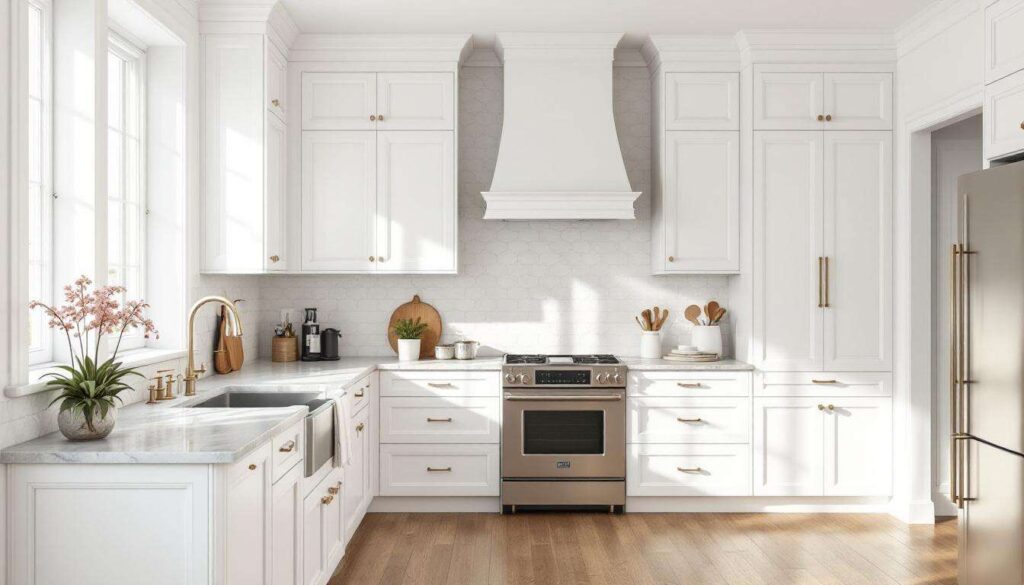
Contractors unanimously agree that neutral colour schemes provide the most enduring appeal. White, cream, grey, and natural wood tones create a versatile backdrop that accommodates changing tastes in accessories and décor. These classic hues also maximise light reflection, making kitchens feel more spacious and inviting.
Strategic use of accent colours
Whilst neutrals dominate timeless kitchens, professionals note that carefully chosen accents add personality without dating the space. Navy blue, forest green, or charcoal grey on an island or select cabinetry provides visual interest whilst remaining sophisticated. The key is restraint: accent colours should enhance rather than dominate.
Finishes and textures
The finish quality matters as much as the colour itself. Contractors recommend:
- Matt or satin finishes for cabinetry rather than high gloss
- Honed or leathered stone instead of highly polished surfaces
- Brushed or satin metal fixtures rather than chrome
- Natural wood grains left visible rather than painted over
These subtle textures add depth and sophistication whilst avoiding the dated appearance that overly shiny or uniform surfaces can acquire. The interplay of textures within a neutral palette creates visual richness without relying on bold colours that may eventually feel tired.
Colour choices work in tandem with spatial planning to create kitchens that feel both generous and efficient.
Optimising living space
Maximising every centimetre
Professional contractors stress that spatial efficiency never loses relevance. Timeless kitchens make intelligent use of available space through thoughtful planning. This includes utilising height with ceiling-height cabinetry, incorporating toe-kick drawers, and designing custom solutions for awkward corners or alcoves.
Open plan considerations
Many modern remodels involve opening kitchens to adjacent living areas. Whilst this reflects contemporary lifestyles, contractors advise ensuring such changes respect the property’s architecture and flow. The most successful open-plan kitchens maintain distinct zones through flooring changes, ceiling details, or subtle level variations rather than complete visual uniformity.
Flexible spaces for evolving needs
Timeless design anticipates change. Adaptable elements ensure the kitchen remains functional as household needs evolve:
- Islands on castors that can be repositioned
- Modular storage systems allowing reconfiguration
- Removable panels concealing appliances
- Multipurpose surfaces serving as dining, working, or preparation areas
This flexibility extends the kitchen’s useful life and prevents the need for further major renovations as circumstances change.
Spatial optimisation creates the framework within which lighting and accessories bring the design to life.
Elegant lighting and accessories
Layered lighting strategies
Contractors identify comprehensive lighting as essential to timeless kitchens. A single central fixture proves inadequate; instead, professionals recommend layering:
- Ambient lighting providing overall illumination
- Task lighting focused on work surfaces and cooking areas
- Accent lighting highlighting architectural features or display items
This approach ensures the kitchen functions effectively at all times whilst creating atmospheric flexibility for different occasions.
Quality fixtures and fittings
The hardware and fixtures selected significantly impact longevity. Professional advice centres on choosing well-made items in classic styles:
| Element | Timeless choice | Avoid |
|---|---|---|
| Cabinet handles | Simple bars, cup pulls, minimal knobs | Ornate decorative pieces |
| Taps | Bridge or professional-style in brushed finishes | Coloured or ultra-modern geometric designs |
| Light pendants | Glass, metal, or simple shades | Trendy shapes or colours |
Restraint in accessorising
Experienced contractors counsel restraint with permanent decorative elements. Built-in features should remain understated, allowing homeowners to personalise through easily changed items like textiles, artwork, or plants. This flexibility prevents the kitchen from appearing dated as tastes evolve.
These finishing touches must complement rather than conflict with the property’s broader architectural character.
Harmony with architectural style
Respecting the building’s character
Contractors emphasise that architectural coherence distinguishes truly timeless renovations. A sleek minimalist kitchen in a Victorian terrace or an overly traditional design in a modern flat feels incongruous. The most successful remodels acknowledge the property’s period and style whilst incorporating contemporary functionality.
Appropriate detailing
This harmony extends to architectural details such as:
- Cornice and skirting profiles matching existing elements
- Door and window proportions respecting original features
- Material choices complementing the building’s construction
- Ceiling heights and room proportions informing cabinet design
Balancing old and new
Professional contractors note that successful integration doesn’t mean slavish reproduction. Rather, it involves understanding the property’s essential character and designing a kitchen that feels natural within that context. Period properties benefit from traditional proportions with modern conveniences discreetly integrated, whilst contemporary homes allow bolder expressions within their architectural language.
Kitchen renovations achieving genuine timelessness share fundamental characteristics that transcend fleeting trends. Clean lines combined with quality natural materials create an enduring foundation, whilst personalisation ensures the space serves its users effectively. Neutral colour palettes provide versatility and longevity, complemented by intelligent spatial planning that maximises functionality. Thoughtful lighting and restrained accessories add refinement without dating the design, and harmony with the property’s architectural character ensures visual coherence. These principles, consistently identified by experienced contractors, offer a reliable framework for creating kitchens that remain relevant, beautiful, and functional for decades to come.