



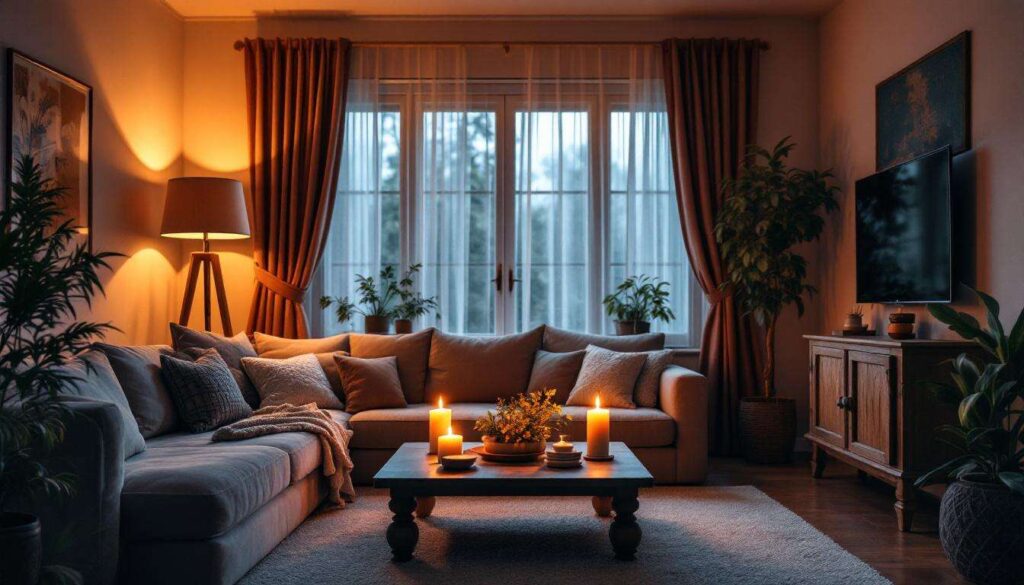
Dark rooms present a unique challenge for homeowners seeking to create comfortable living environments. Poor natural light, low ceilings, or north-facing windows can leave spaces feeling cramped and unwelcoming. Yet with carefully selected lighting techniques, these seemingly problematic areas can be transformed into warm sanctuaries that rival their brighter counterparts. The secret lies not in fighting against the darkness but in strategically layering artificial light sources to sculpt atmosphere and depth.
Master the art of bulbs: choose warm light
Understanding colour temperature for optimal ambience
The foundation of any successful lighting scheme begins with selecting the correct bulb temperature. Measured in Kelvin, colour temperature dramatically influences how a room feels. For dark spaces requiring warmth and intimacy, bulbs ranging between 2700K and 3000K provide the ideal glow that mimics traditional incandescent lighting without the harsh blue undertones of cooler alternatives.
| Bulb Type | Colour Temperature | Best Application |
|---|---|---|
| Warm white | 2700K-3000K | Living rooms, bedrooms |
| Dim-to-warm | 1800K-2700K | Evening relaxation areas |
| Neutral white | 3500K-4000K | Task lighting only |
Implementing dim-to-warm technology
Dim-to-warm bulbs represent a sophisticated solution for dark rooms, as they shift from bright white to amber tones when dimmed. This mimics the natural progression of daylight to candlelight, creating an instinctively comforting atmosphere. These bulbs work particularly well in rooms used throughout the day, adapting from functional morning brightness to cosy evening warmth.
Understanding bulb selection naturally leads to considering how different light sources interact with architectural features.
Transform low ceilings with strategic lighting sources
Avoiding downward-focused fixtures
Low ceilings compound the challenge of dark rooms by creating oppressive spatial sensations. Traditional pendant lights or chandeliers that hang downward accentuate this limitation rather than resolve it. Instead, wall-mounted sconces and uplighters direct illumination towards the ceiling, visually raising the perceived height and creating the illusion of expanded space.
Employing upward light bounce techniques
Fixtures that cast light upwards utilise ceilings as reflective surfaces, distributing soft, indirect illumination throughout the room. This technique offers several advantages:
- Eliminates harsh shadows that make spaces feel smaller
- Creates ambient base lighting that flatters furnishings
- Reduces glare while maintaining adequate brightness
- Adds architectural interest through light and shadow play
Painting ceilings in lighter shades than walls maximises this reflective effect, whilst maintaining medium-toned walls prevents the flat appearance that pure white often creates in naturally dark rooms.
Once vertical surfaces are properly illuminated, reflective elements can multiply these lighting gains exponentially.
Optimise the use of mirrors to reflect light
Strategic mirror placement for maximum impact
Mirrors function as light multipliers when positioned thoughtfully. Placing large mirrors directly opposite windows captures natural light and projects it deeper into the room. For spaces lacking windows, positioning mirrors adjacent to or across from artificial light sources achieves similar effects, effectively doubling the perceived brightness without additional electricity consumption.
Selecting mirror styles that enhance light distribution
Not all mirrors contribute equally to brightening dark spaces. Consider these characteristics when selecting reflective surfaces:
- Frameless or minimally framed mirrors maximise reflective surface area
- Antiqued or tinted mirrors reduce light reflection and should be avoided
- Oversized mirrors create more dramatic lighting effects than smaller pieces
- Mirrored furniture and accessories provide subtle supplementary reflection
Grouping multiple smaller mirrors creates visual interest whilst maintaining the light-enhancing benefits of a single large piece. This approach works particularly well in narrow hallways or compact rooms where oversized mirrors might overwhelm.
The interplay between reflective surfaces and light diffusion materials creates the next layer of atmospheric control.
Opt for appropriate lampshades for a cosy atmosphere
Selecting fabric and colour for optimal light diffusion
Lampshade selection dramatically affects both light quality and quantity in dark rooms. Opaque shades in deep colours absorb light, creating pools of illumination suitable for accent lighting but counterproductive for general brightness. Conversely, pale linen or cotton shades diffuse light gently whilst allowing sufficient brightness to permeate the space.
Matching shade shape to lighting objectives
Shade geometry determines light direction and spread. Drum shades distribute light evenly upward and downward, making them ideal for ambient lighting applications. Empire shades with wider bottoms direct more light downward for task-oriented areas. Coolie shades cast broad pools of light, perfect for illuminating specific zones without harsh boundaries.
| Shade Style | Light Direction | Ideal Room Use |
|---|---|---|
| Drum | Equal up/down | Living rooms, bedrooms |
| Empire | Primarily downward | Reading areas, desks |
| Coolie | Wide downward spread | Dining tables, counters |
Coordinating lampshade choices with varied fixture heights creates the dimensional lighting essential for transformed spaces.
Incorporate multi-height lighting solutions
Creating visual layers through varied fixture positioning
Layered lighting at different heights guides the eye through space whilst eliminating the flat appearance of single-source illumination. Combining floor lamps, table lamps, wall sconces, and ceiling fixtures establishes visual rhythm that makes rooms feel larger and more dynamic. This approach proves particularly effective in open-plan areas where distinct zones require definition without physical barriers.
Balancing ambient, task, and accent lighting
Successful multi-height schemes incorporate three lighting categories:
- Ambient lighting provides overall illumination through ceiling fixtures or uplighters
- Task lighting focuses brightness where activities occur via desk lamps or reading lights
- Accent lighting highlights architectural features or artwork through picture lights or spotlights
Installing dimmer switches on each lighting layer allows customisable atmospheres suited to different times of day or activities. Morning brightness for productivity transitions seamlessly to evening warmth for relaxation through simple adjustments.
Enhancing these carefully positioned light sources with reflective finishes amplifies their transformative potential.
Enhance lighting with lacquered finishes and metallic touches
Incorporating reflective surfaces beyond mirrors
Lacquered furniture and metallic accessories scatter light throughout dark rooms without the obviousness of mirrors. High-gloss paint finishes on woodwork, glossy ceramic tiles, and polished metal hardware all contribute to increased brightness through subtle reflection. These elements work particularly effectively when positioned near light sources, catching and redistributing illumination across broader areas.
Selecting appropriate metallic tones
Different metals reflect light with varying warmth levels. Brass, copper, and rose gold finishes complement warm bulb temperatures whilst adding luxurious depth to dark spaces. Chrome and nickel provide cooler reflections better suited to task lighting areas. Mixing metallic finishes throughout a room creates visual interest whilst maintaining cohesive brightness enhancement.
Strategic placement of metallic picture frames, light fixtures, and decorative objects creates multiple reflection points that collectively brighten spaces more effectively than single large reflective pieces.
Transforming dark rooms into inviting spaces requires thoughtful combination of these lighting strategies. Warm bulb selection establishes the foundational atmosphere, whilst strategic fixture placement and reflective surfaces multiply available light. Multi-height lighting creates dimensional interest, and carefully chosen lampshades diffuse illumination gently throughout the space. Together, these techniques overcome architectural limitations, proving that darkness need not dictate a room’s character or comfort level.