

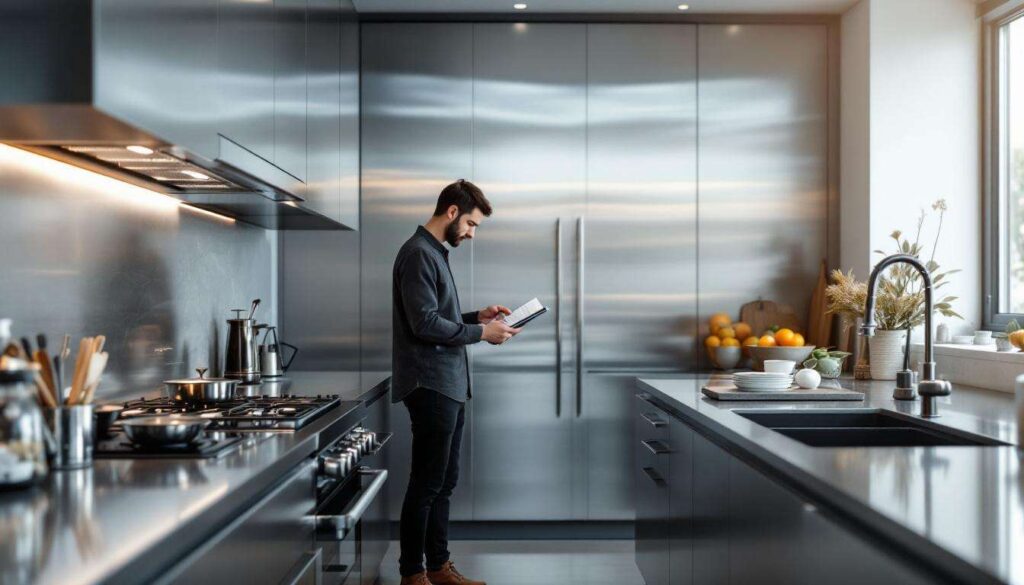
For over two decades, stainless steel has reigned supreme in kitchen design, its gleaming surfaces becoming synonymous with contemporary elegance and culinary sophistication. Yet whispers throughout the design community suggest this metallic monarch may be facing abdication. Leading interior designers across the industry have begun voicing a unified perspective: the era of stainless steel’s dominance is drawing to a close. This shift represents more than mere aesthetic preference; it signals a fundamental transformation in how we conceptualise modern living spaces and the materials that define them.
The Rise of Brushed Steel: new Trend 2026 ?
Understanding the Brushed Steel Phenomenon
Brushed steel has emerged as a sophisticated alternative to traditional stainless finishes, offering a subtler aesthetic that appeals to homeowners seeking refinement without ostentation. Unlike its highly reflective predecessor, brushed steel presents a matte appearance that conceals fingerprints and smudges more effectively whilst maintaining durability.
The manufacturing process involves directional sanding that creates fine lines across the surface, producing a texture that diffuses light rather than reflecting it sharply. This technique results in several advantages:
- Reduced visibility of scratches and wear patterns
- Lower maintenance requirements compared to polished surfaces
- Enhanced compatibility with varied lighting conditions
- Greater versatility in coordinating with diverse colour palettes
Market Adoption and Consumer Response
Major appliance manufacturers have recognised this shifting preference, with brands introducing extensive collections featuring brushed finishes. Consumer data indicates a marked increase in selections favouring these subdued surfaces, particularly amongst younger homeowners prioritising practical elegance over high-maintenance glamour.
| Finish Type | Maintenance Frequency | Fingerprint Visibility | Market Growth (2024-2026) |
|---|---|---|---|
| Traditional Stainless | Daily | High | -8% |
| Brushed Steel | Weekly | Low | +22% |
This statistical evidence reinforces what designers have been observing: homeowners are gravitating towards materials that balance aesthetic appeal with realistic lifestyle demands. The movement towards brushed finishes represents just one facet of a broader transformation reshaping kitchen design philosophy.
Designers Shifting Away From Stainless Steel
Professional Perspectives on Material Evolution
Design professionals have become increasingly vocal about their changing recommendations regarding stainless steel. Interior specialists report that clients now frequently request alternatives, citing concerns about the material’s clinical appearance and demanding maintenance routines. This professional consensus reflects a significant departure from previous decades when stainless steel recommendations were virtually automatic.
The shift stems from multiple considerations:
- Desire for warmer, more inviting kitchen atmospheres
- Recognition that stainless steel can appear dated when poorly integrated
- Client fatigue with constant cleaning requirements
- Increased awareness of alternative materials offering comparable benefits
The Influence of Residential Projects
High-profile residential projects increasingly showcase diverse material palettes that deliberately exclude traditional stainless steel. Designers report that specification lists now prioritise finishes that complement natural materials, textured surfaces, and bespoke colour schemes. This represents a fundamental reconceptualisation of kitchen design as an integrated living space rather than a purely functional zone.
The professional design community’s alignment on this matter extends beyond mere trend-following. It reflects a deeper understanding of how materials influence spatial perception, emotional response, and daily living experiences. As designers continue advocating for these alternatives, the conversation naturally turns to the specific shortcomings that have prompted this industry-wide reassessment.
Stainless Steel Flaws Revealed by Experts
Maintenance Challenges and Practical Limitations
Despite its reputation for durability, stainless steel presents significant practical challenges that experts increasingly highlight. The material’s highly reflective surface acts as a magnet for fingerprints, water spots, and grease residue, requiring constant attention to maintain its intended appearance. Design professionals note that this maintenance burden often proves unsustainable for busy households.
Technical limitations include:
- Susceptibility to scratching from everyday kitchen activities
- Tendency to show water marks and streaks prominently
- Difficulty achieving consistent appearance across different appliance brands
- Potential for discolouration when exposed to certain cleaning products
- Cold aesthetic that conflicts with contemporary warmth-focused design
Aesthetic Incompatibility With Modern Design Directions
Beyond practical concerns, experts identify aesthetic limitations that have become increasingly apparent. Stainless steel’s industrial character, once considered advantageous, now often clashes with the organic textures and natural materials dominating contemporary interiors. The material’s reflective quality can create visual discord in spaces emphasising tactile warmth and subtle sophistication.
| Design Element | Compatibility With Stainless | Visual Impact |
|---|---|---|
| Natural Wood Cabinetry | Poor | Creates temperature contrast |
| Matte Paint Finishes | Moderate | Disrupts visual continuity |
| Stone Surfaces | Variable | Depends on stone type |
| Brass/Copper Accents | Poor | Competing metallic tones |
These identified flaws have catalysed the search for alternatives that address both functional shortcomings and aesthetic limitations, driving innovation in appliance finishes and kitchen materials.
What Materials Are Replacing Stainless Steel ?
Coloured and Textured Finishes
The marketplace now offers an impressive array of alternatives that address stainless steel’s limitations whilst introducing fresh aesthetic possibilities. Manufacturers have developed finishes in bronze, slate, and even bold colours that transform appliances into design statements rather than neutral backgrounds.
Popular replacement materials include:
- Slate finishes offering a sophisticated grey palette with matte texture
- Bronze and brass tones providing warmth and vintage appeal
- Black stainless steel combining durability with dramatic visual impact
- Panel-ready appliances allowing custom cabinetry integration
- Powder-coated colours enabling personalised design schemes
Natural Material Integration
A particularly notable trend involves concealing appliances entirely through panel-ready designs that accept custom cabinetry fronts. This approach allows seamless integration of wood, painted surfaces, or other materials that match surrounding cabinetry, creating unified visual flow throughout the kitchen.
| Material Category | Primary Advantage | Typical Application |
|---|---|---|
| Coloured Finishes | Personality expression | Statement appliances |
| Matte Black | Modern sophistication | Contemporary kitchens |
| Panel-Ready | Complete integration | Luxury installations |
| Metallic Alternatives | Warmth and character | Transitional spaces |
These alternatives collectively represent a fundamental expansion of design possibilities, enabling kitchens that reflect individual style preferences whilst addressing the practical concerns that plagued stainless steel. The availability of these options has profound implications for how contemporary kitchens are conceptualised and constructed.
Impacts on Modern Kitchen Design
Spatial Cohesion and Visual Harmony
The departure from stainless steel enables unprecedented spatial cohesion in kitchen design. Without the visual interruption of highly reflective metallic surfaces, designers can create harmonious environments where materials flow seamlessly from one element to another. This integration supports the contemporary preference for open-plan living where kitchens connect visually and functionally with adjacent spaces.
Design benefits include:
- Enhanced ability to create monochromatic or tonal colour schemes
- Improved integration of kitchen zones with living and dining areas
- Greater flexibility in lighting design without problematic reflections
- Opportunity to emphasise architectural features rather than appliances
Personalisation and Individual Expression
Moving beyond stainless steel has democratised kitchen personalisation, allowing homeowners to express individual aesthetic preferences more fully. The expanded material palette supports diverse design directions, from rustic farmhouse to sleek minimalism, without the constraining presence of standardised metallic finishes.
This shift has transformed appliance selection from a purely functional decision into an integral component of overall design strategy, encouraging more thoughtful consideration of how each element contributes to the intended atmosphere and visual narrative of the space.
Future Outlook for Kitchens Without Stainless Steel
Sustainability and Innovation Drivers
Looking forward, the movement away from stainless steel appears likely to accelerate as manufacturers invest in sustainable alternatives and innovative finishes. Environmental considerations increasingly influence material selection, with consumers seeking options that minimise ecological impact throughout production and lifecycle phases.
Emerging developments include:
- Recycled material finishes with reduced environmental footprint
- Smart surface technologies incorporating antimicrobial properties
- Self-cleaning finishes requiring minimal maintenance intervention
- Modular systems allowing finish updates without appliance replacement
Market Transformation and Consumer Adaptation
Industry analysts predict that stainless steel will retain a presence in certain market segments, particularly amongst consumers prioritising traditional aesthetics or resale considerations. However, its position as the default choice has definitively ended, replaced by a diverse marketplace where multiple materials compete on equal footing.
The transformation reflects broader shifts in consumer behaviour, with homeowners increasingly willing to prioritise personal preference over perceived universal appeal. This confidence in individual choice suggests that future kitchen design will embrace even greater material diversity, with stainless steel occupying a niche rather than dominant position.
The consensus amongst design professionals signals a definitive turning point in kitchen aesthetics. Stainless steel’s retreat from dominance opens possibilities for warmer, more personalised spaces that better reflect contemporary living patterns. Whilst the material will not disappear entirely, its role has fundamentally changed from automatic selection to considered option amongst many alternatives. This evolution encourages homeowners to thoughtfully evaluate materials based on lifestyle needs, aesthetic preferences, and maintenance realities rather than following established conventions. The kitchen of tomorrow promises greater diversity, enhanced integration with living spaces, and finishes that genuinely serve both functional requirements and design aspirations.