



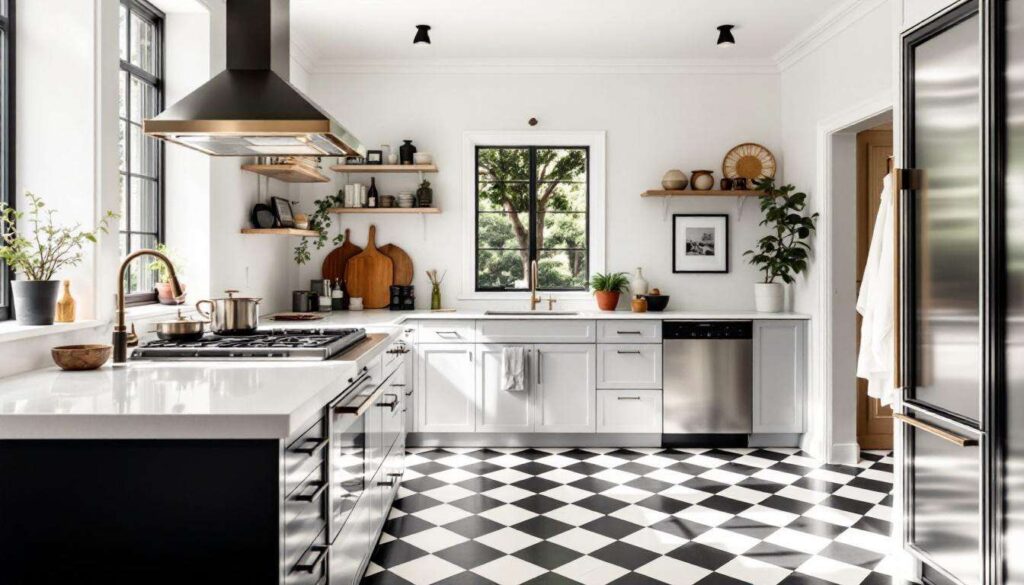
Kitchen design trends come and go, but some patterns possess an enduring appeal that transcends fleeting fashions. The checkerboard floor, with its striking geometric precision and timeless elegance, has returned to claim its place as one of the most sophisticated choices for modern kitchens. This classic pattern, whether rendered in traditional black and white or reimagined in contemporary colour palettes, brings instant character and visual interest to any culinary space. As homeowners seek distinctive ways to elevate their interiors without undertaking extensive renovations, the painted checkerboard floor has emerged as an accessible yet impactful solution that combines historical charm with contemporary sensibility.
The renaissance of checkerboard floors
A pattern steeped in history
The checkerboard motif boasts a remarkable heritage spanning centuries and continents. From the ornate floors of ancient Egyptian temples to the grand hallways of Victorian manor houses, this distinctive pattern has consistently symbolised refinement and sophistication. During the 1920s and 1930s, checkerboard floors became synonymous with fashionable cafes and domestic kitchens, representing modernity and cleanliness in an era of rapid social change.
Why the pattern endures
Several factors contribute to the checkerboard’s lasting appeal:
- Its geometric simplicity creates visual order and structure within a space
- The pattern offers remarkable versatility, complementing both period properties and contemporary homes
- Checkerboard floors provide an effective backdrop for various design styles, from minimalist to maximalist
- The bold contrast naturally draws the eye, creating a focal point that grounds the entire room
Interior designers have observed that this pattern possesses a unique ability to bridge the gap between nostalgia and modernity, making it particularly relevant for homeowners seeking character without sacrificing contemporary aesthetics. The current resurgence reflects a broader movement towards celebrating traditional craftsmanship and design elements that have proven their worth over time, whilst adapting them to suit modern lifestyles and budgets.
Bold colours or black and white: what choice for your kitchen ?
The timeless appeal of monochrome
The classic black-and-white combination remains the most popular choice for checkerboard kitchen floors, and with good reason. This high-contrast pairing delivers maximum visual impact whilst maintaining a sense of elegance that never dates. The stark juxtaposition creates a crisp, clean aesthetic that particularly suits traditional and transitional kitchen designs. Monochrome checkerboard floors work exceptionally well in smaller kitchens, where the pattern adds interest without overwhelming the space.
Exploring contemporary colour palettes
Modern interpretations of the checkerboard pattern embrace a broader spectrum of hues:
| Colour combination | Design effect | Best suited for |
|---|---|---|
| Grey and white | Subtle sophistication | Minimalist, Scandinavian-inspired kitchens |
| Warm terracotta and cream | Rustic charm | Country-style, farmhouse kitchens |
| Navy and white | Nautical elegance | Coastal, traditional kitchens |
| Red and white | Vintage cheerfulness | Retro, 1950s-inspired spaces |
Factors influencing your colour decision
When selecting colours for your checkerboard floor, consider the following elements:
- Natural light availability: darker combinations work best in well-lit spaces, whilst lighter palettes can brighten dimmer kitchens
- Existing cabinetry and worktop colours: ensure your floor complements rather than clashes with established elements
- The overall mood you wish to create: bold colours inject energy, whilst muted tones promote tranquillity
- Maintenance considerations: lighter colours may show dirt more readily in high-traffic areas
The beauty of painted checkerboard floors lies in their flexibility, allowing homeowners to experiment with unconventional colour combinations that reflect personal taste whilst maintaining the pattern’s inherent structure. This freedom of expression has contributed significantly to the pattern’s renewed popularity amongst design-conscious homeowners.
Aesthetic and practical benefits of checkerboard floors
Visual advantages that transform spaces
Checkerboard floors offer numerous aesthetic benefits that extend beyond their obvious visual appeal. The pattern naturally creates a sense of movement and dynamism, guiding the eye across the room and making spaces feel more engaging. In open-plan layouts, a checkerboard floor can effectively delineate the kitchen zone without requiring physical barriers, maintaining flow whilst establishing distinct functional areas.
The geometric precision of the pattern also introduces architectural interest to rooms that might otherwise lack distinctive features. This is particularly valuable in modern homes with minimal mouldings or period details, where the floor becomes a statement element that anchors the entire design scheme.
Practical considerations for busy kitchens
Beyond aesthetics, checkerboard floors deliver tangible practical advantages:
- Camouflaging capabilities: the varied pattern naturally disguises minor marks, scuffs, and everyday wear far more effectively than solid-colour flooring
- Enhanced grip and safety: painted finishes can be sealed with non-slip coatings, providing better traction than some glossy tiles
- Cost-effectiveness: painting an existing floor costs significantly less than installing new tiles or luxury vinyl
- Flexibility for future changes: painted patterns can be refreshed or altered relatively easily compared to permanent installations
Durability and maintenance
When properly prepared and sealed, painted checkerboard floors prove remarkably durable and low-maintenance. Modern floor paints and protective finishes create tough surfaces that withstand the demands of busy kitchen environments. Regular sweeping and occasional mopping with appropriate cleaners maintain the floor’s appearance, whilst periodic resealing ensures long-lasting protection.
Understanding both the visual impact and practical functionality of checkerboard floors helps homeowners make informed decisions about incorporating this pattern into their kitchen design, naturally leading to questions about implementation methods and techniques.
How to incorporate the checkerboard pattern into your kitchen
Assessing your existing floor
Before embarking on a checkerboard floor project, evaluate your current flooring condition. Wooden floorboards represent the ideal canvas for painted patterns, provided they are structurally sound and relatively level. Fill any gaps between boards and sand the surface to create proper paint adhesion. Concrete floors also accept paint well after appropriate priming, whilst existing vinyl or linoleum may require removal for best results.
The painting process demystified
Creating a painted checkerboard floor involves several key steps:
- Thorough preparation: clean the floor meticulously, removing all grease, dirt, and previous finishes
- Apply a suitable primer designed for floor surfaces to ensure paint adhesion
- Measure and mark your grid carefully, using chalk lines to maintain accuracy
- Apply base coat colour across the entire floor, allowing proper drying time
- Tape off alternate squares and paint the contrasting colour
- Remove tape whilst paint remains slightly tacky to achieve clean edges
- Apply multiple coats of protective floor sealant once paint has fully cured
Alternative installation methods
For those preferring permanent solutions, traditional tile installation offers longevity and authentic texture. Options include:
| Material type | Advantages | Considerations |
|---|---|---|
| Ceramic tiles | Affordable, wide colour range | Can chip, requires professional installation |
| Marble tiles | Luxurious appearance, unique veining | Expensive, requires sealing, shows wear |
| Vinyl tiles | Budget-friendly, DIY-friendly | Less authentic appearance than paint |
Whether choosing the accessible route of painted floors or investing in permanent tile installation, the checkerboard pattern adapts to various skill levels and budgets, making it achievable for most homeowners seeking to refresh their kitchen aesthetic.
Design inspiration: adding character with a painted floor
Complementing different kitchen styles
The versatility of checkerboard floors allows them to enhance virtually any kitchen aesthetic. In traditional country kitchens, a warm cream and sage green checkerboard creates rustic charm whilst maintaining sophistication. Modern minimalist spaces benefit from subtle grey-and-white patterns that add interest without disrupting the clean-lined aesthetic. For those embracing maximalist design, bold colour combinations can anchor eclectic collections of furnishings and accessories.
Balancing pattern with other design elements
Successfully incorporating a checkerboard floor requires thoughtful consideration of surrounding elements:
- Keep wall treatments relatively simple to avoid visual competition with the floor pattern
- Choose solid-colour cabinetry rather than heavily grained wood that might create visual chaos
- Select plain or subtly patterned window treatments that complement rather than clash
- Use the floor colours as a springboard for accent colours in accessories and soft furnishings
Scale and proportion considerations
The size of individual squares significantly impacts the overall effect. Larger squares create a more contemporary, spacious feeling and work particularly well in expansive kitchens or open-plan spaces. Smaller squares deliver traditional charm and suit compact kitchens, though they require more meticulous execution during painting or installation. As a general guideline, squares measuring between 30 and 45 centimetres provide versatile proportions that flatter most kitchen dimensions.
Drawing inspiration from historical examples whilst adapting the pattern to contemporary sensibilities allows homeowners to create unique spaces that reflect personal style, a concept that becomes clearer when examining how this pattern has evolved over time.
The evolution of checkerboard patterns through the years
From ancient symbolism to domestic charm
The checkerboard’s journey through design history reveals fascinating shifts in meaning and application. Ancient civilisations employed the pattern for its symbolic significance, representing duality and balance. By the medieval period, checkerboard floors appeared in churches and palaces, denoting status and refinement. The pattern’s democratisation occurred during the Victorian era, when advances in tile manufacturing made it accessible to middle-class households seeking to emulate aristocratic style.
Twentieth-century interpretations
The 1920s and 1930s witnessed the checkerboard floor’s golden age in domestic kitchens, where it symbolised modernity and hygiene. Post-war decades saw the pattern fall from favour as wall-to-wall carpeting and seamless vinyl gained popularity. However, the 1980s brought renewed interest in period features, with homeowners restoring original checkerboard floors in Victorian and Edwardian properties.
Contemporary revival and innovation
The current resurgence differs markedly from previous iterations:
- Emphasis on painted rather than tiled applications, reflecting budget consciousness and DIY culture
- Experimentation with unconventional colour palettes beyond traditional black and white
- Integration with diverse design styles rather than strict period accuracy
- Appreciation for imperfection and handcrafted aesthetics over machine-perfect precision
This evolution demonstrates the pattern’s remarkable adaptability, continuously reinventing itself whilst maintaining its essential character. The checkerboard floor has transcended its historical associations to become a genuinely contemporary choice that honours tradition without being constrained by it.
The enduring appeal of checkerboard kitchen floors lies in their unique ability to combine visual drama with practical functionality. Whether executed in classic monochrome or adventurous contemporary colours, this pattern transforms ordinary kitchens into distinctive spaces with genuine character. The accessibility of painted applications has democratised a once-exclusive design feature, allowing homeowners to achieve sophisticated results without prohibitive costs. As demonstrated throughout its rich history, the checkerboard pattern possesses a timeless quality that adapts seamlessly to changing tastes whilst maintaining its fundamental elegance. For those seeking to elevate their kitchen aesthetic with a single impactful element, the painted checkerboard floor represents an inspired choice that delivers both immediate visual reward and lasting appeal.