
Small dining rooms present a unique design challenge, requiring careful consideration of every element to create an environment that feels open and inviting. Whether in a compact flat or a modest home, the dining area often serves as a central gathering point for meals and conversation. With thoughtful planning and strategic design choices, even the most limited spaces can be transformed into areas that feel surprisingly spacious and comfortable. Designers have developed numerous techniques to maximise the perceived size of these rooms, combining practical solutions with aesthetic appeal to ensure functionality never compromises style.
Maximising space with the right layout
Selecting the appropriate table shape
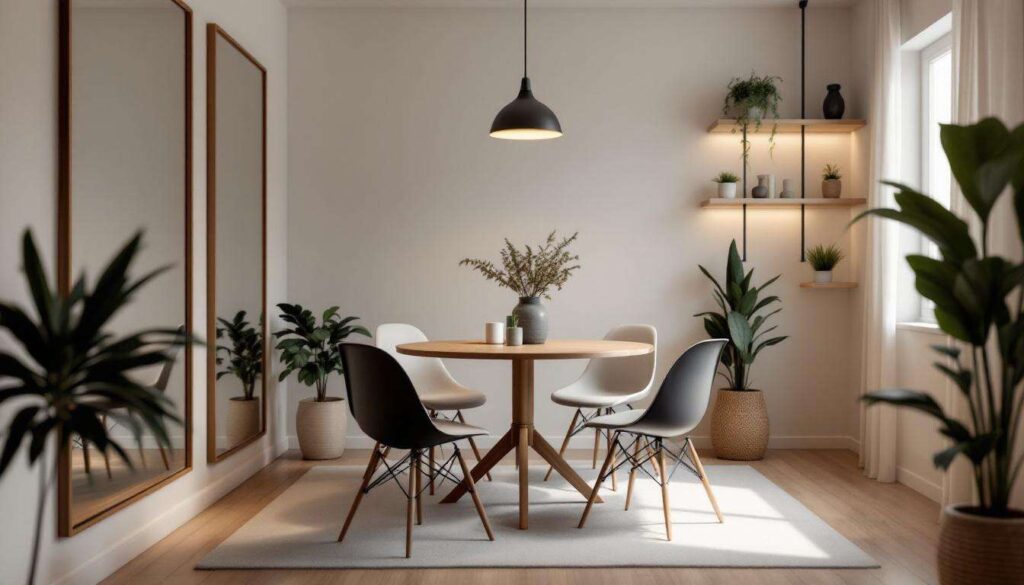
The choice of table shape significantly impacts how spacious a dining room feels. Round tables offer distinct advantages over their rectangular counterparts in confined spaces. Without sharp corners, they facilitate easier movement around the room and create a more fluid circulation pattern. This shape allows diners to sit closer together without feeling cramped, fostering a more intimate atmosphere whilst maintaining comfort.
For those requiring flexibility, extendable tables provide an excellent solution. These versatile pieces can remain compact for everyday use, then expand to accommodate additional guests during special occasions. This adaptability prevents the need for an oversized table that would dominate the room permanently.
Optimising furniture placement
Strategic positioning of furniture is essential for maintaining an open feel. Consider these placement principles:
- Position the table centrally to allow equal circulation space on all sides
- Ensure at least 90 centimetres between the table edge and walls or other furniture
- Avoid blocking natural pathways through the room
- Keep the area near doorways clear to prevent a cluttered entrance
Selecting furniture with clean lines and slim profiles further enhances the sense of space. Low-backed chairs or transparent acrylic seating options reduce visual bulk, allowing the eye to travel freely across the room. Fixed benches along one wall can accommodate multiple diners whilst occupying minimal floor space.
Understanding how layout influences perception naturally leads to considering how colour choices can amplify these spatial effects.
Choosing light colours to visually expand
The power of pale palettes
Light colours possess remarkable abilities to make small spaces feel more expansive. White, cream, and soft grey tones reflect natural light effectively, creating an airy atmosphere that visually pushes walls outward. These neutral shades serve as an excellent foundation for any design scheme, providing versatility for future décor changes.
Painting walls, ceilings, and trim in similar light tones creates a seamless visual flow that eliminates harsh boundaries. This technique prevents the eye from stopping at defined edges, instead allowing it to move continuously throughout the space.
Incorporating warm hues strategically
Whilst light colours dominate, this doesn’t preclude the use of richer tones. Warm, jewel-toned accents such as deep plums or terracottas can add depth and character when applied thoughtfully. Consider using these colours on a single feature wall or through textiles like velvet cushions and curtains, which introduce tactile richness without overwhelming the space.
| Colour approach | Visual effect | Best application |
|---|---|---|
| All-white scheme | Maximum brightness and expansion | Walls, ceiling, and large furniture |
| Soft neutrals | Warm, inviting spaciousness | Overall room palette |
| Jewel-tone accents | Depth with intentional cosiness | Feature walls, textiles, accessories |
Once the colour foundation is established, selecting furniture that serves multiple purposes becomes the next priority.
Prioritising multifunctional furniture
Storage-integrated seating
In small dining rooms, every piece must earn its place through functionality. Benches with built-in storage compartments provide seating whilst concealing table linens, serving dishes, or seasonal décor. This dual purpose eliminates the need for additional storage furniture that would consume precious floor space.
Similarly, buffets and sideboards with streamlined designs offer essential storage for dining essentials whilst their surfaces can display decorative items or serve as a preparation area during meals. Choosing pieces with legs rather than those that sit flush to the floor creates visual lightness by allowing light to pass beneath.
Adaptable dining solutions
Consider these multifunctional options:
- Drop-leaf tables that fold down when not in use
- Nesting chairs that stack compactly for storage
- Console tables that convert to full dining tables
- Ottoman seating that doubles as extra surface space
These versatile pieces provide flexibility for different occasions whilst maintaining a streamlined appearance during everyday use. The key lies in selecting items with simple, uncluttered designs that don’t visually overwhelm the space even when fully deployed.
With furniture carefully chosen, attention turns to how illumination can further enhance the perception of space.
Playing with lighting to create space
Layering light sources
Effective lighting design involves combining multiple sources to eliminate shadows and create an even, bright environment. Ambient lighting provides overall illumination, whilst task lighting focuses on specific areas, and accent lighting highlights architectural features or artwork.
A statement pendant lamp suspended above the dining table serves as both a functional light source and a decorative focal point. Choosing fixtures with transparent or reflective elements, such as glass or polished metal, allows light to disperse more freely throughout the room.
Maximising natural light
Natural light remains the most effective tool for making spaces feel larger. Keep window treatments minimal and opt for sheer fabrics that filter light whilst maintaining privacy. Avoid heavy curtains or dark blinds that block precious sunlight and create visual weight.
Strategic placement of artificial lighting includes:
- Wall sconces to draw the eye upward and emphasise ceiling height
- Recessed spotlights to provide even illumination without cluttering sightlines
- Under-cabinet lighting to eliminate dark corners
- Dimmer switches to adjust ambiance for different occasions
Proper illumination works hand in hand with reflective surfaces to amplify the sense of space.
Using mirrors to add depth
Strategic mirror placement
Mirrors rank among the most powerful tools for visually expanding small rooms. A large mirror positioned opposite a window reflects natural light throughout the space, effectively doubling its brightness. This reflection creates the illusion of an additional window, making the room feel more open and connected to the outdoors.
Consider placing mirrors on the longest wall to create the impression of extended depth. Floor-to-ceiling mirrors prove particularly effective, as they eliminate visual boundaries and make ceilings appear higher.
Reflective surfaces beyond mirrors
Incorporating other reflective materials enhances this effect:
- Glass-topped tables that allow light to pass through
- Metallic finishes on light fixtures and hardware
- Glossy paint finishes that bounce light around the room
- Mirrored furniture pieces such as cabinets or console tables
| Reflective element | Placement recommendation | Impact level |
|---|---|---|
| Large wall mirror | Opposite window or light source | High |
| Glass table top | Central dining area | Medium |
| Metallic accents | Throughout room | Subtle but cumulative |
Whilst reflective surfaces expand space visually, the décor selected must support rather than contradict this effect.
Incorporating minimalist decorative elements
The principle of restraint
In small dining rooms, less truly becomes more. Every decorative item should serve a purpose or bring genuine joy, as excessive ornamentation creates visual chaos that makes spaces feel cramped. Adopting a minimalist approach doesn’t mean eliminating personality; rather, it involves curating pieces that make meaningful contributions to the overall design.
Select one or two statement pieces rather than numerous small items. A single striking piece of artwork or a sculptural vase creates impact without cluttering sightlines. Keep tabletops clear when not in use, storing items in designated spaces to maintain an uncluttered appearance.
Vertical design elements
Drawing the eye upward creates the impression of greater height. Consider these vertical strategies:
- Tall, slender vases with dramatic branches or flowers
- Vertical artwork or gallery walls arranged in ascending patterns
- Floor-to-ceiling curtains hung close to the ceiling
- Floating shelves arranged at varying heights
Choose furniture with exposed legs rather than pieces that sit heavily on the floor. This creates negative space beneath, allowing light and sightlines to flow freely. Transparent or lucite chairs offer seating without visual bulk, maintaining an open feel even when the table is fully surrounded.
Implementing these seven designer-approved strategies transforms small dining rooms into spaces that feel remarkably larger and more inviting. The combination of thoughtful layout planning, strategic colour choices, multifunctional furniture, layered lighting, reflective surfaces, and restrained décor creates an environment where size limitations fade into the background. Each element works synergistically to enhance both the perceived dimensions and the functional comfort of the space. By approaching small dining room design with intention and creativity, homeowners can create areas that serve as welcoming gathering spots without feeling confined or compromised. The result is a dining experience that feels spacious, elegant, and perfectly suited to both intimate meals and larger gatherings.