
Farmhouse style has captured the hearts of homeowners across the country, transforming countless properties into havens of rustic charm and cosy comfort. Yet beneath the surface of shiplap walls and distressed wood furnishings, a growing chorus of interior designers is expressing fatigue with certain overused elements. What began as a refreshing departure from sleek minimalism has, in some cases, evolved into a formulaic approach that lacks authenticity and individual character. Design professionals are now calling for a more thoughtful, edited version of this beloved aesthetic, one that retains its warmth whilst shedding the trends that have become tired and predictable.
Excessive reproductions
The proliferation of mass-produced nostalgia
The farmhouse movement has spawned an industry of reproduction vintage items that flood retail spaces and online marketplaces. From faux enamel signs advertising non-existent general stores to manufactured “antique” farm implements, these mass-produced pieces have saturated homes to the point of cliché. Designers note that authentic character cannot be replicated through factory-made nostalgia, no matter how weathered the finish appears.
The issue extends beyond mere aesthetics. When every home features identical reproductions, the personal narrative that should distinguish one space from another disappears entirely. Original folk art and genuine antiques carry stories and craftsmanship that connect us to actual history, whilst reproductions offer only superficial styling.
Alternatives to consider
Design professionals recommend several approaches to achieve authenticity:
- Source genuine 19th-century folk art pieces from reputable antique dealers or auctions
- Commission contemporary artisans to create unique pieces that reflect personal taste
- Display family heirlooms that carry genuine sentimental value
- Invest in fewer, higher-quality decorative objects rather than numerous cheap reproductions
- Mix periods and styles to create a collected-over-time aesthetic
The shift towards more discerning decoration choices naturally leads to examining another pervasive farmhouse convention that designers increasingly question.
Overuse of black and white
The monochromatic monotony
The black and white colour scheme has become virtually synonymous with modern farmhouse style, appearing in everything from buffalo check patterns to kitchen cabinetry. Whilst this high-contrast palette certainly creates visual impact, its ubiquity has rendered many farmhouse interiors indistinguishable from one another. Designers observe that this restrictive approach to colour often results in spaces that feel stark rather than welcoming.
| Element | Traditional farmhouse approach | Contemporary alternative |
|---|---|---|
| Soft furnishings | Black and white buffalo check | Vintage ticking stripes in navy or burgundy |
| Kitchen cabinets | White cabinets with black hardware | Sage green or soft blue with brass fittings |
| Wall treatments | White shiplap throughout | Warm neutrals with selective wood accent walls |
Introducing nuanced colour palettes
The solution lies not in abandoning contrast entirely but in expanding the colour vocabulary beyond this binary choice. Historical farmhouses actually featured rich, varied colour schemes drawn from natural pigments and regional preferences. Deep barn reds, soft butter yellows, muted greens, and warm terracotta tones all have legitimate farmhouse pedigree whilst offering far more visual interest than the ubiquitous black and white combination.
Beyond colour choices, another aspect of farmhouse style has become equally problematic in its execution.
The obsession with perfection
Curated rusticity versus authentic living
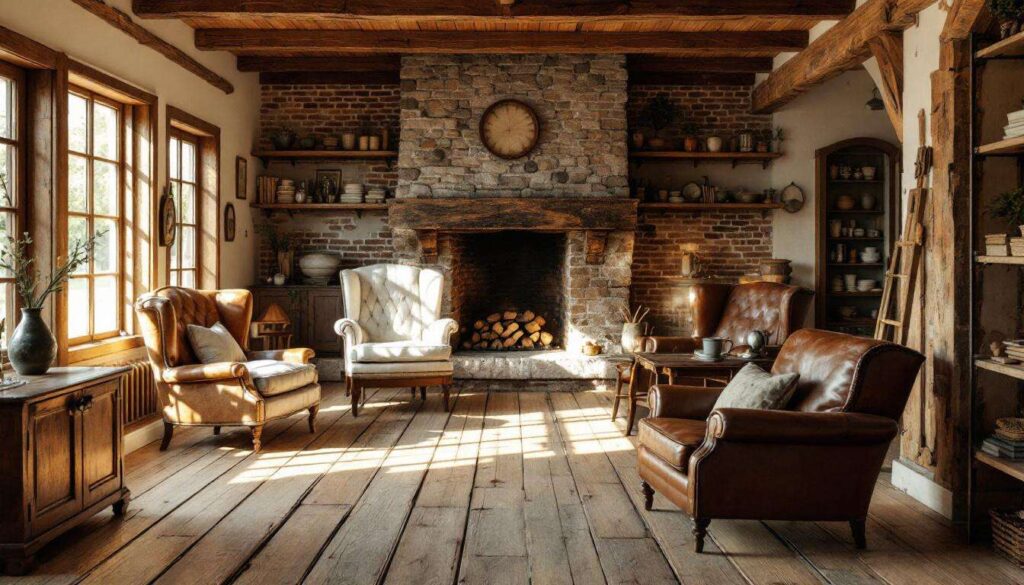
Perhaps the most ironic criticism of contemporary farmhouse style concerns its overly staged appearance. True farmhouses evolved organically over generations, accumulating layers of use, repair, and adaptation. Today’s farmhouse interiors often present a sanitised version of rural life where every element appears carefully orchestrated, from precisely arranged vintage crocks to strategically placed cotton stems.
This pursuit of perfection contradicts the very essence of farmhouse living, which celebrated practicality and made do with available resources. Designers note that the most successful farmhouse interiors embrace imperfection: unmatched chairs around the dining table, walls that show their age, and collections that reflect genuine interests rather than decorating directives.
Embracing authentic imperfection
Creating a more genuine farmhouse aesthetic requires:
- Allowing patina and wear to develop naturally rather than artificially distressing new items
- Mixing furniture styles and periods as real farmhouses did
- Displaying functional items in use rather than purely decorative arrangements
- Accepting that not everything needs to coordinate perfectly
- Prioritising comfort and livability over photogenic styling
Whilst perfection concerns the overall aesthetic approach, specific decorative elements have also worn out their welcome.
Cheap barn lighting
The fixture that launched a thousand imitations
Industrial-style barn lighting has become so synonymous with farmhouse style that it appears in virtually every interpretation of the aesthetic. However, the quality disparity between authentic vintage fixtures and their mass-produced counterparts has become glaringly apparent. Designers express particular frustration with thin metal reproductions that lack the substantial presence and craftsmanship of genuine barn lights.
The problem with ubiquity
Beyond quality concerns, the sheer prevalence of barn-style pendants has stripped them of any distinctive character. When identical fixtures appear in kitchens, bathrooms, hallways, and outdoor spaces throughout a home, the result feels formulaic rather than thoughtfully designed. True farmhouses featured diverse lighting solutions based on function and available technology, not a single repeated motif.
Lighting alternatives with character
Design professionals suggest exploring:
- Vintage schoolhouse globes with substantial glass and brass fittings
- Reclaimed industrial cage lights with authentic patina
- Simple ceramic pendant shades in warm glazes
- Wrought iron chandeliers with genuine age and craftsmanship
- Task lighting that reflects actual historical farmhouse solutions
Just as lighting choices have become predictable, certain architectural elements have similarly reached saturation point.
Interior sliding doors
The barn door phenomenon
Few elements epitomise farmhouse style more completely than interior sliding barn doors. What began as a clever space-saving solution has evolved into an obligatory feature installed regardless of practical necessity. Designers report that clients often request barn doors simply because they associate them with the style, not because sliding doors serve any functional advantage in their particular space.
Practical drawbacks
Beyond aesthetic oversaturation, barn doors present genuine functional limitations:
- They provide minimal sound insulation compared to traditional hinged doors
- The exposed track and hardware collect dust and require regular maintenance
- They occupy wall space on both sides, limiting furniture placement and artwork display
- They offer no privacy gap seal, making them unsuitable for bathrooms
- The hardware often overwhelms smaller spaces visually
When barn doors work and when they don’t
Sliding doors genuinely serve specific situations: large openings where traditional doors would obstruct flow, spaces with limited swing clearance, or areas where the door itself becomes an architectural feature. However, installing them throughout a home simply for stylistic reasons represents form prioritised over function, contrary to farmhouse principles of practical design.
Architectural choices connect closely to broader colour trends that have similarly reached their limits.
The dominance of beige
The beige takeover
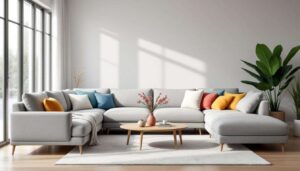
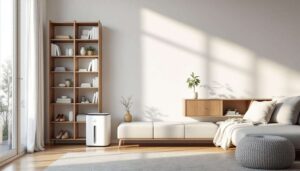
Whilst black and white dominated one era of farmhouse style, the pendulum has swung towards an all-encompassing beige palette that designers find equally problematic. This trend towards warm neutrals has resulted in spaces where walls, floors, furnishings, and accessories exist within such a narrow tonal range that rooms lack visual definition and depth.
| Space | Beige saturation issues | Recommended approach |
|---|---|---|
| Living areas | Beige walls, beige sofa, beige rug create flatness | Introduce terracotta, olive, or rust accents |
| Kitchens | Beige cabinets with beige stone lack contrast | Add wood tones or coloured tile backsplash |
| Bedrooms | Monochromatic beige feels institutional | Layer textures and introduce deeper accent colours |
The case for colour confidence
Historical farmhouses embraced colour drawn from their surroundings: the blue of delft tiles, the green of copper patina, the red of brick and barn paint. These colours provided warmth and character whilst remaining grounded in natural materials. Modern interpretations that rely exclusively on beige miss the richness that made original farmhouses visually engaging.
Designers encourage homeowners to view neutrals as a foundation rather than the entire palette, introducing colours through textiles, artwork, and architectural details that create depth and interest whilst maintaining the warmth associated with farmhouse style.
Farmhouse style possesses enduring appeal rooted in its emphasis on comfort, authenticity, and connection to heritage. However, the trends that have come to define its contemporary interpretation often work against these core principles. By moving beyond excessive reproductions, restrictive colour schemes, staged perfection, ubiquitous fixtures, obligatory architectural elements, and monotonous neutrals, homeowners can create spaces that honour farmhouse traditions whilst feeling fresh and personally meaningful. The most successful farmhouse interiors balance rustic charm with thoughtful editing, embrace imperfection whilst maintaining quality, and prioritise genuine character over formulaic styling. As design continues evolving, the farmhouse aesthetic that endures will be one that respects its roots whilst adapting to contemporary needs and individual expression.