

Residential architecture has reached a turning point where the limitations of fully open layouts have become impossible to ignore. Homeowners and design professionals alike are seeking alternatives that balance openness with functionality, privacy with connection. The broken floor plan has emerged as a compelling solution, offering a middle ground that addresses the shortcomings of both traditional closed rooms and completely open spaces. This design philosophy reshapes how we think about domestic environments, creating homes that adapt to the complex demands of contemporary living without sacrificing aesthetic appeal or practical utility.
Understanding the concept of a broken plan
Defining the broken plan approach
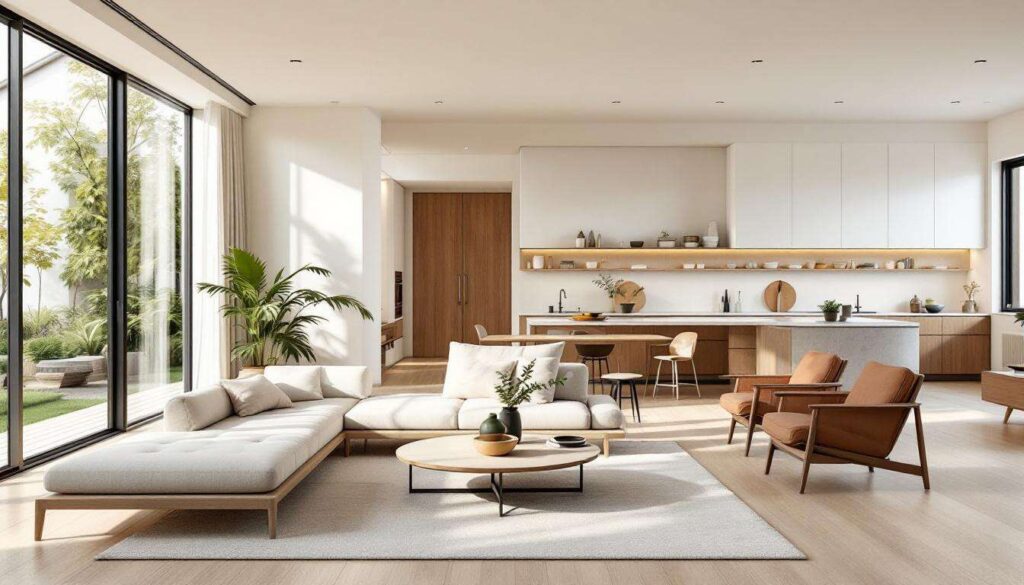
A broken plan represents a strategic compromise between fully open and traditionally compartmentalised layouts. Rather than eliminating walls entirely or maintaining rigid room divisions, this approach introduces partial separations that define zones without completely isolating them. The concept relies on subtle architectural interventions such as:
- Half-height partition walls that maintain sightlines whilst creating boundaries
- Sliding or folding screens that offer adjustable privacy
- Strategic furniture placement that delineates functional areas
- Changes in floor levels or ceiling heights to signal transitions
- Freestanding storage units that serve dual purposes as dividers
Historical origins and terminology
The term gained prominence when an architect served as a jury member for the RIBA House of the Year competition, bringing attention to this nuanced design philosophy. However, the underlying principles have existed for decades, with designers experimenting with ways to create flexible living environments that respond to changing needs. The broken plan essentially formalises techniques that architects have employed intuitively, giving name to a practice that balances the social benefits of open living with the functional requirements of defined spaces.
This architectural evolution reflects broader shifts in how we inhabit our homes, setting the stage for understanding why traditional approaches have fallen short.
Issues with traditional open floor plans
The privacy deficit
Open floor plans, popularised since the mid-twentieth century, promised enhanced social interaction and a sense of spaciousness. Yet this openness comes at a considerable cost. Families struggle to find quiet zones for concentration, whether for remote work, studying, or simply moments of solitude. The acoustic challenges prove particularly problematic, with cooking sounds, television noise, and conversations blending into an overwhelming cacophony that permeates every corner of the living space.
Functional limitations
The traditional kitchen triangle concept, designed around three fixed points, has become increasingly obsolete in modern homes. Contemporary kitchens contain numerous appliances and workstations that cannot be accommodated within this simplistic framework. Open plans often result in:
- Insufficient storage solutions that compromise aesthetics
- Difficulty maintaining tidiness as every area remains visible
- Challenges in creating distinct atmospheres for different activities
- Limited flexibility in furniture arrangement
- Heating and cooling inefficiencies due to large, undivided volumes
Visual monotony and spatial confusion
Paradoxically, spaces designed to feel expansive can instead feel disorienting and undefined. Without clear boundaries, rooms lack identity and purpose. The visual monotony of a single large space offers little architectural interest, and the absence of transitions between zones diminishes the experiential richness that characterised traditional homes with distinct rooms.
| Open plan characteristic | Resulting issue |
|---|---|
| No physical barriers | Lack of privacy and acoustic control |
| Single large volume | Energy inefficiency and climate control difficulties |
| Undefined zones | Spatial confusion and reduced functionality |
| Constant visibility | Pressure to maintain tidiness throughout |
These accumulated frustrations have prompted designers to reconsider how domestic spaces can better serve their occupants, leading to innovative solutions that preserve openness whilst addressing its inherent problems.
Advantages of a broken plan for your space
Enhanced flexibility and adaptability
Broken plans excel at providing adaptable environments that respond to changing needs throughout the day and across different life stages. A space might function as an open entertaining area during social gatherings, then transform into separate zones for work, relaxation, and food preparation during typical weekdays. This dynamic quality proves particularly valuable in smaller homes where every square metre must serve multiple purposes without feeling cramped or chaotic.
Improved acoustic and visual privacy
Partial dividers significantly reduce noise transmission between zones whilst maintaining visual connections where desired. A half-height wall can shield a workspace from kitchen activity without creating complete isolation. Sliding screens offer adjustable privacy, allowing occupants to open spaces for gatherings or close them for concentrated tasks. This nuanced approach acknowledges that privacy exists on a spectrum rather than as a binary choice between completely open or entirely closed.
Architectural interest and character
The introduction of varied spatial elements creates visual intrigue that single-volume spaces cannot match. Changes in ceiling height, strategic placement of columns, or the use of transparent materials as dividers all contribute to a richer architectural experience. Each zone can develop its own character whilst contributing to a cohesive whole, resulting in homes that feel both unified and diverse.
Practical benefits for modern living
- Better climate control through zoned heating and cooling
- Reduced visual clutter as untidy areas can be screened
- Enhanced safety for households with young children
- Improved lighting control with distinct zones
- Greater opportunities for varied interior design styles
Understanding these advantages naturally leads to questions about implementation, as homeowners seek practical guidance for incorporating broken plan principles into their own spaces.
How to design a space with a broken plan
Assessing your spatial needs
Successful broken plan design begins with a thorough analysis of how you actually use your space. Consider which activities require privacy, which benefit from connection, and where flexibility matters most. Document daily routines, noting conflicts between simultaneous activities and identifying zones that feel either too exposed or too isolated. This functional mapping provides the foundation for strategic interventions that enhance rather than hinder your lifestyle.
Choosing appropriate dividing elements
The selection of partition types depends on the degree of separation required and the architectural character you wish to achieve. Options include:
- Glazed partitions that maintain visual connection whilst providing acoustic separation
- Timber or metal screens with varied opacity levels
- Built-in shelving units that serve storage needs whilst defining boundaries
- Sliding doors or panels that offer adjustable configurations
- Changes in floor materials or levels to signal transitions
Maintaining flow and coherence
Whilst creating distinct zones, it remains essential to preserve visual and physical flow throughout the space. Ensure sightlines connect key areas, use consistent materials or colours to unify separate zones, and avoid creating awkward circulation patterns. The goal is differentiation without fragmentation, where boundaries feel natural rather than arbitrary or obstructive.
Technical considerations
| Design element | Consideration |
|---|---|
| Lighting | Ensure each zone receives adequate natural and artificial light |
| Ventilation | Maintain air circulation whilst introducing dividers |
| Structural elements | Verify load-bearing requirements for new partitions |
| Building regulations | Confirm compliance with local codes regarding room divisions |
As these design principles gain traction, broader trends are emerging that shape how broken plans manifest in contemporary residential architecture.
Current trends in broken floor plans
Material and aesthetic preferences
Contemporary broken plan implementations favour natural materials and transparent or translucent elements that maintain lightness whilst providing separation. Fluted glass, timber battens, and metal mesh screens appear frequently, offering visual interest without heaviness. The aesthetic leans towards minimalist sophistication, where dividing elements become architectural features rather than mere functional necessities.
Technology integration
Smart home technology enhances the flexibility inherent in broken plans. Automated sliding partitions respond to schedules or voice commands, adjustable lighting systems create distinct atmospheres for different zones, and climate control adapts to which areas are in use. This technological layer amplifies the adaptability that makes broken plans appealing, allowing spaces to transform with minimal physical effort.
Zoning strategies for specific functions
Designers increasingly create dedicated zones for activities that have gained prominence:
- Home office areas with acoustic separation from living spaces
- Wellness zones for exercise or meditation
- Multipurpose rooms that transition between guest accommodation and hobby spaces
- Kitchen zones that separate food preparation from dining and socialising
These functional priorities reflect evolving lifestyles and demonstrate how broken plans accommodate contemporary needs more effectively than rigid traditional layouts.
Beyond immediate functionality and aesthetics, broken plans offer compelling advantages from an environmental and long-term value perspective.
Broken plan: an added value for a sustainable home
Energy efficiency benefits
Zoned spaces enable targeted climate control, reducing energy consumption by heating or cooling only occupied areas. Partial dividers create thermal zones without requiring the energy investment of fully separate rooms, whilst still preventing heat loss or gain across the entire dwelling. This efficiency advantage translates directly into reduced utility costs and lower environmental impact over the building’s lifetime.
Adaptability and longevity
Homes designed with broken plan principles accommodate changing needs without requiring major renovations. As families grow, age, or shift work patterns, the flexible nature of partial divisions allows spaces to evolve. This inherent adaptability extends the functional life of the home, reducing the environmental and financial costs associated with extensive remodelling or relocation.
Material efficiency and resource conservation
Broken plans typically require fewer materials than constructing full-height walls throughout a space, yet deliver greater functionality than completely open layouts. Strategic use of multifunctional elements such as storage-dividers reduces overall material consumption whilst maximising utility. This efficiency aligns with sustainable design principles that prioritise doing more with less.
The broken floor plan represents more than a passing design trend. It addresses fundamental shortcomings in both traditional closed layouts and fully open plans, offering a sophisticated middle path that enhances privacy, flexibility, and functionality. By introducing thoughtful partial separations, these designs create homes that adapt to complex modern lifestyles whilst maintaining the spatial generosity and social connectivity that open plans promised. As sustainability concerns and changing work patterns continue to reshape residential priorities, the broken plan’s combination of efficiency, adaptability, and architectural interest positions it as a enduring approach to domestic design that serves both immediate needs and long-term value.