

The living room serves as the central hub of most homes, where families gather, guests are entertained, and daily life unfolds in comfort. Achieving the ideal layout requires careful consideration of space, functionality, and personal lifestyle needs. A well-planned arrangement transforms this essential room into a harmonious environment that balances aesthetics with practicality, ensuring every square metre contributes to a cohesive and inviting atmosphere.
Understanding your living room space
Assessing dimensions and architectural features
Before purchasing furniture or sketching arrangements, precise measurements of your living room are essential. Record the length and width of the space, noting ceiling height and any architectural elements such as alcoves, bay windows, or built-in features. These measurements form the foundation for all subsequent decisions and prevent costly mistakes.
Architectural features often dictate layout possibilities. Fireplaces, windows, and doorways create natural focal points and circulation patterns that must be accommodated. Identify these elements early in the planning process:
- Window positions and their impact on natural light distribution
- Door swing directions and clearance requirements
- Radiators, electrical outlets, and television aerial points
- Structural columns or beams that cannot be moved
Evaluating traffic flow patterns
Circulation routes through the living room determine how comfortably people can move within the space. Maintain clear pathways of at least 76 to 91 centimetres between major furniture pieces to allow unobstructed movement. In tighter spaces, a minimum of 46 centimetres may suffice, though this can feel cramped during gatherings.
Observe how family members naturally move through the room. Do they cut across to reach the kitchen or garden ? Understanding these patterns helps position furniture to facilitate rather than hinder daily routines.
With a thorough understanding of your space’s physical characteristics and movement patterns, the next step involves translating these observations into a practical arrangement strategy.
Configuring a suitable living room plan
Establishing a focal point
Every successful living room centres around a dominant visual element that anchors the entire arrangement. This focal point might be a fireplace, an entertainment unit, a striking artwork, or a panoramic window with exceptional views. Furniture should orient towards this feature to create visual coherence and purposeful arrangement.
Without a clear focal point, rooms often feel disjointed and lack direction. If your space lacks an obvious architectural feature, create one through deliberate design choices such as an accent wall, a gallery display, or a substantial piece of furniture.
Defining functional zones
Modern living rooms frequently serve multiple purposes beyond simple relaxation. Delineating distinct zones for different activities maximises functionality without sacrificing aesthetic appeal. Consider which activities your household prioritises:
- Conversation areas for entertaining guests
- Media viewing zones for television or cinema experiences
- Reading nooks with adequate lighting and comfortable seating
- Work or study spaces for remote working arrangements
- Play areas for children’s activities
Area rugs, lighting variations, and furniture groupings effectively separate these zones whilst maintaining visual unity. A well-placed rug beneath a seating arrangement defines that area without requiring physical barriers.
Creating scale and proportion guidelines
Furniture dimensions must correspond appropriately to room size. Oversized sofas overwhelm compact spaces, whilst diminutive pieces appear lost in expansive rooms. Use these proportional guidelines:
| Room dimension | Sofa length recommendation | Coffee table size |
|---|---|---|
| Small (under 3m × 4m) | 150-180 cm | 90 cm maximum length |
| Medium (3m × 4m to 4m × 5m) | 180-220 cm | 100-120 cm length |
| Large (over 4m × 5m) | 220+ cm or sectional | 120+ cm length |
These proportions ensure furniture feels balanced within the available space, neither cramping nor underwhelming the room’s volume.
Having established the conceptual framework for your layout, attention turns to the practical positioning of individual furniture pieces.
Optimising furniture arrangement
Positioning seating for conversation
Arrange seating to facilitate comfortable dialogue by placing chairs and sofas at distances that encourage interaction without requiring raised voices. The ideal conversation distance ranges from 1.5 to 2.5 metres between facing seats. This proximity feels intimate without encroaching on personal space.
Avoid pushing all furniture against walls, a common mistake that creates awkward voids in the room’s centre. Instead, float furniture pieces away from walls by 7 to 12 centimetres to create visual breathing room and a more sophisticated appearance.
Coffee table placement principles
The coffee table serves as the functional centrepiece of most seating arrangements. Position it approximately 45 to 61 centimetres from sofa edges, allowing comfortable reach whilst maintaining adequate legroom. The table length should measure roughly half the sofa’s length to maintain visual proportion.
Consider table height relative to seating. Standard coffee tables measure 40 to 45 centimetres tall, aligning comfortably with typical sofa seat heights of 43 to 48 centimetres.
Side table and lighting considerations
Side tables positioned beside seating provide essential surfaces for beverages, books, and lighting. Place these within easy arm’s reach, typically 15 to 30 centimetres from chair or sofa arms. Table height should align with or sit slightly below arm height for convenient access.
Lighting layers create ambience and functionality. Combine these elements:
- Ambient lighting from ceiling fixtures or wall-mounted sources
- Task lighting via table lamps or reading lights
- Accent lighting highlighting artwork or architectural features
Furniture arrangement naturally leads to one of the most debated aspects of living room design: television placement.
Choosing the right spot for the television
Determining optimal viewing distance and height
Television viewing distance depends on screen size to ensure comfortable watching without eye strain. Use this formula: multiply the screen diagonal measurement by 1.5 to 2.5 for the ideal viewing distance. A 55-inch television, for example, performs best when viewed from 2.1 to 3.5 metres away.
Screen height matters equally. The centre of the television should align with eye level when seated, typically 95 to 107 centimetres from the floor for standard seating heights. Mounting televisions too high forces uncomfortable neck angles during extended viewing.
Balancing television prominence with room aesthetics
Whilst televisions serve important entertainment functions, they need not dominate the visual landscape. Consider these integration strategies:
- Concealing screens within cabinets or behind sliding panels when not in use
- Incorporating the television into gallery wall arrangements
- Using media consoles that complement rather than compete with décor
- Positioning screens perpendicular to windows to minimise glare
Some households prefer the television as a secondary focal point, arranging furniture to accommodate both screen viewing and alternative conversation groupings. This flexibility proves valuable when entertaining guests who may not wish to focus on media.
Managing cables and technical requirements
Modern entertainment systems involve multiple components and connecting cables. Plan for adequate electrical outlets near the television location, ideally on dedicated circuits to prevent overload. Cable management solutions maintain clean aesthetics through concealment channels, furniture with integrated wire management, or professional installation within walls.
Even the most conventional living rooms occasionally present spatial challenges that require creative solutions.
Integrating solutions for unusual spaces
Addressing awkward room shapes
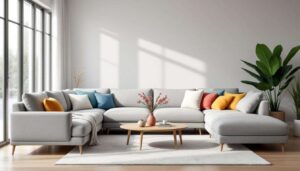
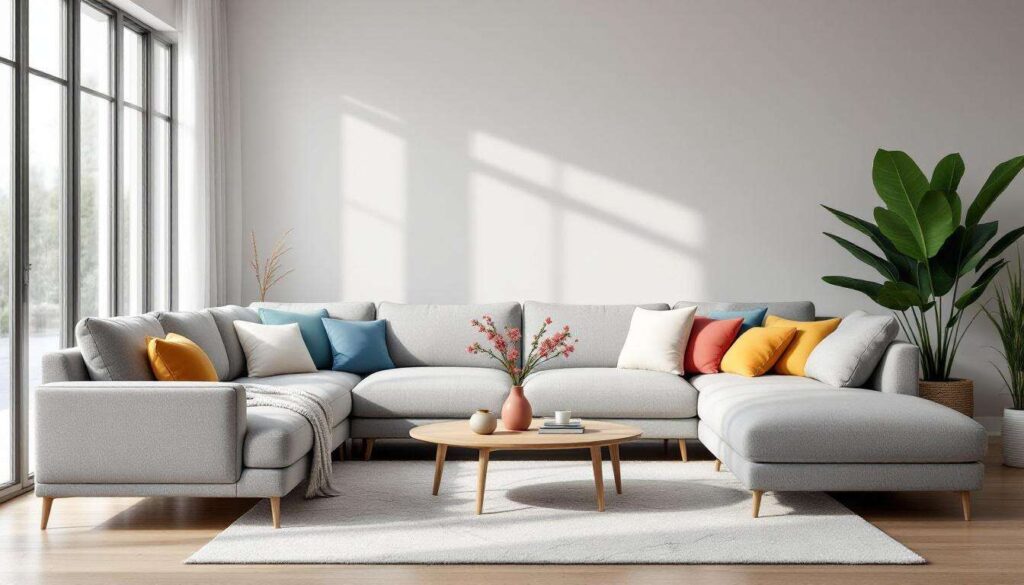
L-shaped, narrow, or irregularly proportioned rooms demand thoughtful furniture selection and placement. Sectional sofas adapt particularly well to L-shaped spaces, fitting snugly into corners whilst maximising seating capacity. In narrow rooms, arrange furniture along the length rather than width to enhance the sense of space.
Bay windows and alcoves present opportunities rather than obstacles. Transform these features into reading nooks with fitted seating, or use them to house display cabinets that celebrate the architectural character.
Maximising compact living rooms
Small living rooms benefit from strategic furniture choices that prioritise versatility. Multifunctional pieces serve dual purposes without cluttering limited floor space:
- Ottoman storage units providing seating and concealed organisation
- Nesting tables offering flexibility for entertaining
- Sofa beds accommodating overnight guests
- Wall-mounted shelving preserving floor area
Mirrors strategically positioned opposite windows amplify natural light and create the illusion of expanded space. Light colour palettes further enhance this effect, making compact rooms feel more spacious and airy.
Working with open-plan configurations
Open-plan living spaces blur boundaries between cooking, dining, and relaxation areas. Define the living zone through furniture arrangement, area rugs, and lighting schemes that create psychological separation without physical barriers. Position sofas with backs towards other functional areas to establish distinct territories within the shared space.
Having addressed spatial challenges, the final consideration involves creating an environment that balances visual appeal with everyday practicality.
Creating a welcoming and functional atmosphere
Selecting appropriate colour schemes
Colour choices profoundly influence spatial perception and emotional response. Light neutrals expand visual boundaries and reflect natural light, making them ideal for compact or dimly lit rooms. Deeper tones introduce warmth and intimacy, particularly effective in spacious areas that might otherwise feel cavernous.
Coordinate furniture upholstery, wall colours, and accessories to establish visual harmony. A cohesive palette need not be monotonous; introduce variety through texture and pattern whilst maintaining tonal consistency.
Incorporating storage solutions
Clutter undermines even the most thoughtfully arranged living room. Integrate storage throughout the space to maintain order:
- Media units with closed cabinets concealing equipment and media collections
- Bookcases displaying treasured items whilst hiding everyday necessities
- Window seats with lift-up compartments for seasonal items
- Decorative baskets and boxes maintaining accessible organisation
Sufficient storage prevents surfaces from accumulating miscellaneous items, preserving the clean lines and intentional arrangement that characterise well-designed spaces.
Adding personality through accessories
Accessories transform functional arrangements into personalised environments. Cushions, throws, artwork, and decorative objects inject character and warmth. However, restraint prevents visual chaos. Curate accessories thoughtfully, grouping items in odd numbers and varying heights for visual interest.
Plants introduce organic elements that soften hard furnishing lines whilst improving air quality. Select specimens appropriate to available light conditions, positioning them where they enhance rather than obstruct sightlines and circulation.
The perfect living room layout emerges from careful analysis of spatial characteristics, thoughtful furniture selection and placement, and attention to both aesthetic and practical considerations. By measuring spaces accurately, establishing clear focal points, maintaining appropriate circulation paths, and balancing functionality with visual appeal, any living room can become a welcoming environment suited to household needs. Whether working with compact urban flats or generous suburban spaces, these principles adapt to create comfortable, attractive rooms that enhance daily life and graciously accommodate guests.