



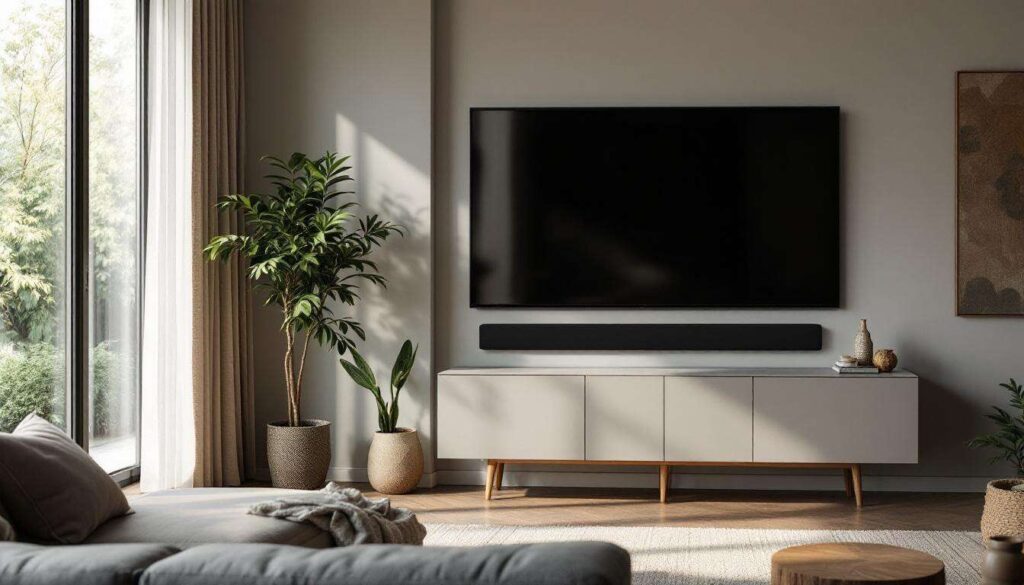
The sleek black rectangle of a soundbar, whilst delivering impressive audio quality, can sometimes feel like an unwelcome intrusion in a carefully curated living space. Many homeowners invest considerable time and resources into perfecting their interior design, only to find that essential entertainment technology disrupts the visual harmony they’ve worked so hard to achieve. The challenge lies not in abandoning superior sound quality, but in discovering intelligent methods to incorporate these devices without compromising aesthetic integrity.
The aesthetic impact of a soundbar in your living room
Visual disruption in contemporary spaces
Soundbars, despite their relatively compact design compared to traditional speaker systems, can create unexpected visual clutter in living rooms. The stark contrast between modern technology and classic interior styles often proves jarring, particularly in homes featuring traditional or minimalist design schemes. The presence of visible cables, LED indicators, and the device’s industrial appearance can detract from carefully chosen furniture pieces and decorative elements.
The psychology of visual balance
Interior designers consistently emphasise the importance of visual balance within a room. When a soundbar sits prominently beneath a television or mounted on a wall, it draws the eye away from focal points you’ve deliberately created. This disruption affects the room’s overall flow and can make spaces feel less cohesive. The following elements contribute to this aesthetic challenge:
- Contrasting materials that clash with existing décor
- Disproportionate sizing relative to surrounding furniture
- Visible wiring that creates visual noise
- Blinking lights and displays that demand attention
- Colour mismatches with wall treatments and furnishings
Understanding these visual challenges provides the foundation for implementing effective concealment strategies that preserve both functionality and beauty.
Creative techniques to conceal a soundbar
Architectural integration methods
One of the most effective approaches involves incorporating the soundbar into existing architectural features. Custom cabinetry with acoustic fabric panels allows sound to pass through whilst hiding the device completely. This solution works particularly well in media rooms or formal living spaces where seamless integration remains paramount. Built-in niches created during renovation projects can accommodate soundbars perfectly, treating them as architectural elements rather than afterthoughts.
Furniture-based concealment solutions
Specially designed media consoles offer compartments that house soundbars behind perforated doors or sliding panels. These pieces serve dual purposes, providing storage whilst maintaining clean sightlines. Consider the following furniture options:
- Floating shelves with integrated soundbar recesses
- Console tables with hidden technology compartments
- Bespoke TV stands featuring acoustic-transparent fronts
- Ottoman-style benches that conceal audio equipment
- Wall-mounted cabinets with retractable doors
Decorative camouflage techniques
For those seeking less permanent solutions, decorative elements can effectively disguise soundbars. Fabric wraps in coordinating colours blend the device into surrounding décor, whilst maintaining acoustic performance. Strategically placed artwork, plants, or decorative objects can draw attention away from the soundbar, creating visual interest elsewhere in the room.
These concealment techniques demonstrate that technology and design need not exist in opposition, leading naturally to broader considerations of holistic integration.
How to integrate your soundbar into interior design
Colour coordination strategies
Selecting soundbars in finishes that complement existing colour palettes represents a simple yet effective integration method. Manufacturers now offer devices in various finishes including white, wood grain, and custom colours. Matching the soundbar to wall colours, media console finishes, or other technology creates visual continuity rather than contrast.
Proportional considerations
The relationship between soundbar size and surrounding elements significantly impacts visual harmony. A soundbar should neither overwhelm nor appear lost within its context. Consider these proportional guidelines:
| Television size | Recommended soundbar width | Visual impact |
|---|---|---|
| 32-43 inches | 30-38 inches | Balanced proportion |
| 50-55 inches | 40-48 inches | Harmonious scale |
| 65-75 inches | 50-60 inches | Appropriate presence |
| 80+ inches | 60+ inches | Professional integration |
Material harmony
Choosing soundbars with materials that echo existing room elements creates cohesion. Wooden finishes complement traditional interiors, whilst metallic options suit contemporary spaces. Glass and acrylic components can lighten the visual weight of technology, making it feel less intrusive within refined environments.
Beyond individual integration tactics, emerging technological innovations offer even more sophisticated approaches to this design challenge.
Innovative solutions for integrating audio technology
In-wall and in-ceiling systems
The most architecturally integrated solution involves installing speakers directly into walls or ceilings. Whilst requiring professional installation, these systems eliminate visible equipment entirely. Paintable grilles blend seamlessly with surrounding surfaces, providing exceptional sound quality without any aesthetic compromise. This approach works particularly well in new construction or major renovation projects.
Wireless and invisible speaker technology
Recent technological advances have produced virtually invisible speaker solutions that mount flush with walls or hide behind plaster. These systems use surface vibration to create sound, eliminating the need for traditional speaker cabinets. Wireless connectivity further reduces cable clutter, contributing to cleaner, more sophisticated interiors.
Furniture with integrated audio
Manufacturers increasingly offer furniture pieces with built-in speaker systems. These innovative products include:
- Coffee tables with concealed soundbars and subwoofers
- Sofas featuring integrated surround sound systems
- Shelving units with hidden audio components
- Headboards incorporating personal audio zones
- Mirrors with embedded speakers for multi-room audio
Such solutions represent the convergence of furniture design and audio engineering, though their effectiveness depends largely on avoiding common placement errors.
Soundbar placement mistakes to avoid
Acoustic performance compromises
Whilst concealment remains important, sacrificing sound quality defeats the soundbar’s purpose. Placing devices inside completely enclosed cabinets without acoustic transparency muffles audio and creates resonance issues. Similarly, positioning soundbars too far from listening areas or at incorrect heights diminishes the intended audio experience.
Ventilation and heat concerns
Electronic equipment generates heat requiring adequate airflow. Common mistakes include:
- Enclosing soundbars in tight spaces without ventilation
- Stacking objects directly on top of devices
- Blocking air vents with decorative elements
- Installing equipment in direct sunlight
- Placing soundbars near heat sources
Accessibility and functionality issues
Overly ambitious concealment can create practical problems with daily use. Remote control signals require clear paths to receivers, whilst physical controls need reasonable access. Cable management solutions must allow for occasional adjustments and connections. Balancing aesthetic goals with functional requirements ensures long-term satisfaction with placement decisions.
These practical considerations ultimately serve the larger objective of creating living spaces where technology enhances rather than detracts from overall ambience.
Creating harmony between your home cinema and interior
Holistic design approaches
Successful integration requires viewing the entire entertainment system as part of the room’s design rather than separate elements. This perspective encourages coordinated solutions where television mounting, soundbar placement, and cable management work together cohesively. Consider the entertainment wall as a designed feature, incorporating lighting, artwork, and storage alongside technology.
Flexible multi-purpose spaces
Modern living often demands rooms serve multiple functions. Creating spaces that transform from formal sitting rooms to entertainment centres requires adaptable solutions. Motorised lifts, sliding panels, and convertible furniture allow technology to appear when needed and disappear when formal presentation takes priority.
Professional design consultation benefits
Engaging interior designers or audio-visual specialists can yield solutions that balance aesthetic and technical requirements expertly. These professionals understand acoustic principles, architectural possibilities, and design trends, creating integrated systems that homeowners might not envision independently.
The intersection of superior audio performance and beautiful interior spaces need not involve compromise. Through thoughtful planning, creative concealment techniques, and appropriate technology selection, soundbars can enhance both the auditory and visual experience of living rooms. Whether employing architectural integration, furniture-based solutions, or decorative camouflage, numerous approaches exist to maintain design integrity whilst enjoying exceptional sound quality. The key lies in viewing technology as an integral design element from the outset, allowing form and function to coexist harmoniously within contemporary homes.