
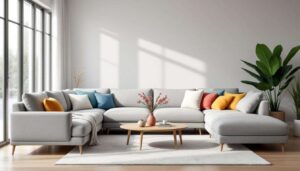
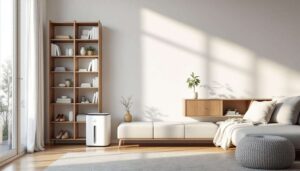

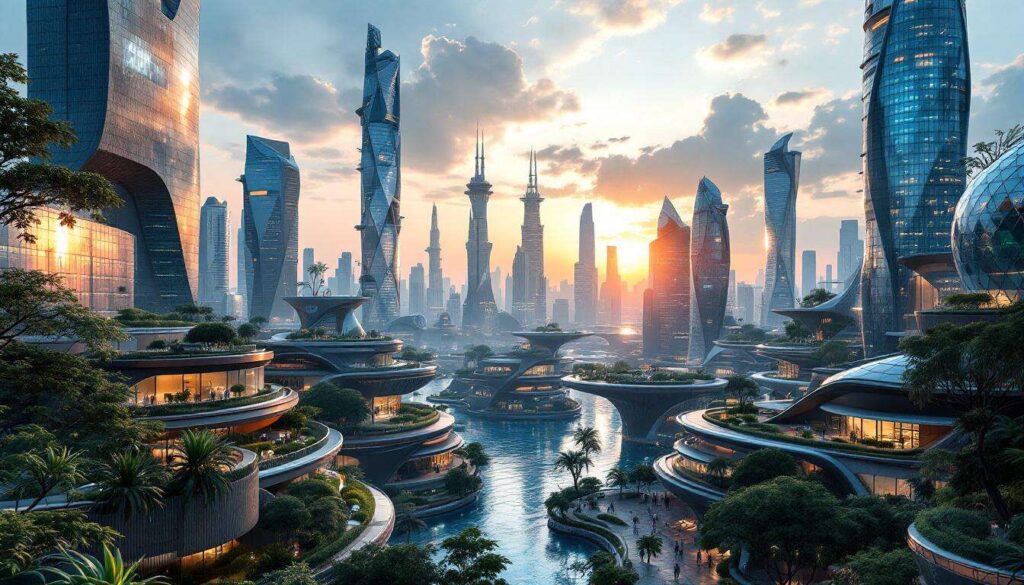
The architectural profession stands at a pivotal juncture where environmental urgency, technological innovation and evolving human needs converge to reshape the built environment. Designers worldwide are abandoning conventional approaches in favour of methodologies that prioritise planetary health, occupant well-being and adaptability. These shifts reflect not merely aesthetic preferences but fundamental recalibrations in how structures interact with their surroundings and inhabitants. The coming period promises to cement transformations already underway, establishing new standards that balance ambition with responsibility.
Sustainable creation and environmental respect
Eco-responsible construction methods redefining industry standards
The architectural sector has embraced sustainability as a non-negotiable foundation rather than an optional consideration. Practitioners now prioritise construction techniques that dramatically reduce carbon footprints, selecting materials with minimal environmental impact throughout their lifecycle. This paradigm shift extends beyond superficial green credentials to encompass comprehensive assessments of extraction, manufacturing, transportation and eventual disposal or recycling.
Several key principles guide this transformation:
- Selection of locally sourced materials to reduce transportation emissions
- Implementation of circular economy principles in building design
- Integration of renewable energy systems from initial planning stages
- Utilisation of reclaimed and recycled components wherever feasible
- Design for disassembly to facilitate future material recovery
Climate-reactive design responding to local conditions
Architectural responses increasingly acknowledge that site-specific solutions yield superior outcomes compared to standardised approaches. Designers analyse microclimates, prevailing winds, solar orientation and seasonal variations to optimise thermal performance naturally. This climate-reactive methodology reduces reliance on mechanical systems whilst enhancing occupant comfort through passive strategies that have proven effective across centuries.
| Design Strategy | Environmental Benefit | Energy Reduction |
|---|---|---|
| Passive solar orientation | Natural heating and lighting | 30-40% |
| Cross-ventilation planning | Reduced cooling demands | 25-35% |
| Thermal mass integration | Temperature stabilisation | 20-30% |
These environmental considerations naturally extend into how buildings incorporate technological advancements that enhance performance without compromising ecological principles.
Integration of smart technologies and connected homes
Artificial intelligence revolutionising design processes
The incorporation of artificial intelligence into architectural workflows has fundamentally altered how professionals approach design challenges. AI-powered tools now generate and evaluate countless iterations rapidly, assessing each option against criteria including structural integrity, energy efficiency, material optimisation and programmatic requirements. This computational capacity enables exploration of solutions that would prove impractical through traditional methods.
Rather than replacing human creativity, these technologies amplify it by handling repetitive calculations and allowing designers to focus on conceptual innovation and spatial quality. The early design phases benefit particularly from this assistance, as multiple scenarios can be tested against real-world constraints before significant resources are committed.
Human-centric smart buildings prioritising occupant well-being
Contemporary intelligent buildings diverge from earlier technology-focused approaches by emphasising occupant well-being as the primary objective. Systems monitor and adjust environmental conditions—lighting, temperature, air quality—based on actual usage patterns and individual preferences. However, the most significant advancement lies in how these buildings foster social connection through thoughtfully designed communal spaces that encourage interaction.
Key features of human-centric smart buildings include:
- Adaptive lighting systems that mirror natural circadian rhythms
- Air quality monitoring with automated ventilation adjustments
- Acoustic management systems for optimal sound environments
- Integrated wellness facilities promoting physical activity
- Communal zones designed to facilitate spontaneous social encounters
This technological sophistication complements the growing demand for spaces that accommodate diverse and changing functional requirements.
Flexible and multifunctional spaces for evolving living
Adaptive reuse transforming heritage structures
The practice of adaptive reuse has gained substantial momentum as communities recognise the value in preserving architectural heritage whilst meeting contemporary needs. Historic buildings undergo careful transformation into modern facilities that respect original character whilst introducing necessary amenities. This approach offers environmental advantages by retaining existing structures rather than demolishing and rebuilding, simultaneously preserving cultural narratives embedded in older constructions.
Successful adaptive reuse projects balance preservation with innovation, often revealing hidden architectural features whilst inserting contemporary elements that clearly distinguish new interventions from original fabric. This honest dialogue between past and present creates layered spatial experiences that enrich urban environments.
Kinetic and transformable architectural elements
Architects increasingly incorporate kinetic components that physically adapt to changing circumstances. Movable walls, retractable roofs, adjustable shading systems and modular furniture arrangements allow spaces to reconfigure according to immediate requirements. This spatial flexibility proves particularly valuable in residential contexts where rooms must accommodate work, leisure, exercise and rest within limited footprints.
These dynamic solutions extend the functional lifespan of buildings by enabling them to evolve alongside occupant needs rather than becoming obsolete when circumstances change. The capacity for transformation represents a sophisticated response to contemporary life’s unpredictability.
Such adaptability finds natural expression in the materials selected to create these evolving environments.
Organic materials and new expression of luxury
Return to natural materials and artisanal craftsmanship
A pronounced shift towards natural materials reflects growing environmental consciousness and desire for authentic tactile experiences. Timber, stone, clay, bamboo and other organic substances feature prominently in contemporary projects, often processed using traditional techniques that honour centuries of accumulated knowledge. This renewed appreciation for craftsmanship introduces human scale and imperfection into built environments increasingly dominated by industrial precision.
Modern technology enhances rather than replaces these traditional methods. Digital fabrication tools enable artisans to execute complex geometries whilst maintaining handcrafted quality, creating hybrid approaches that combine ancestral wisdom with contemporary capabilities.
Digital fabrication creating innovative textures and forms
Three-dimensional printing and advanced digital manufacturing techniques have unlocked unprecedented formal possibilities. Architects employ these technologies to produce sculptural elements with intricate patterns and textures impossible through conventional construction methods. These innovations redefine both interior finishes and exterior facades, introducing visual richness that challenges expectations.
| Fabrication Method | Material Application | Design Advantage |
|---|---|---|
| 3D printing | Concrete, ceramics, composites | Complex geometries, reduced waste |
| CNC milling | Timber, stone, metal | Precision detailing, repeatability |
| Robotic assembly | Modular components | Speed, consistency, customisation |
This technological sophistication paradoxically enhances connection to natural processes when deployed thoughtfully.
Biophilic architecture and integral well-being
Merging buildings with natural surroundings
Biophilic design principles assert that human health depends fundamentally on connection with nature. Architects respond by blurring boundaries between interior and exterior, incorporating abundant vegetation, natural light, water features and organic materials throughout projects. This approach recognises that psychological and physical well-being improve measurably when occupants maintain regular contact with natural elements.
Elevated courtyards, green walls, rooftop gardens and strategically positioned openings create multiple opportunities for nature engagement throughout daily routines. These interventions transform buildings into living ecosystems that support biodiversity whilst providing restorative environments for human inhabitants.
Biophilia as contemporary luxury standard
The ultimate expression of luxury has shifted from ostentatious displays towards spaces that nurture holistic well-being. Affluent clients increasingly prioritise properties offering profound connections to landscape, abundant natural light and materials that age gracefully. This redefined luxury emphasises quality of experience over quantity of possessions, valuing tranquillity, beauty and harmony with ecological systems.
Essential elements of biophilic sanctuaries include:
- Generous glazing providing visual connections to gardens and landscapes
- Internal courtyards bringing nature into building cores
- Natural ventilation systems delivering fresh air throughout
- Water features creating soothing ambient soundscapes
- Indigenous planting schemes supporting local wildlife
These principles collectively establish new benchmarks for architectural excellence that prioritise planetary health alongside human flourishing.
The architectural profession has entered a transformative period characterised by ecological responsibility, technological integration and deepened understanding of human needs. Sustainable construction methods now form the foundation of practice whilst artificial intelligence enhances design capabilities without diminishing creative vision. Adaptive reuse preserves cultural heritage, flexible spaces accommodate evolving requirements, and natural materials reconnect occupants with authentic experiences. Most significantly, biophilic principles recognise that genuine luxury emerges from harmony with natural systems rather than domination over them. These converging trends signal a maturation of architectural thinking that balances innovation with humility, ambition with stewardship, establishing frameworks for buildings that serve both present generations and those yet to come.