

Kitchen remodelling represents a significant investment in your home, and selecting the right custom features can transform your space into a highly functional and visually striking environment. Designers across the industry have identified several key elements that homeowners should prioritise when planning their kitchen renovations. These features combine practicality with contemporary aesthetics, ensuring your kitchen remains relevant and efficient for years to come. Understanding which custom elements offer the greatest return on investment and daily usability will help guide your decision-making process as you embark on this exciting transformation.
Spatial planning and layout flexibility
Moving beyond the traditional work triangle
The conventional kitchen work triangle has served homeowners well for decades, but modern cooking habits demand more adaptable spatial arrangements. Designers now advocate for zone-based planning that accommodates multiple users simultaneously. This approach creates distinct areas for food preparation, cooking, cleaning and storage, allowing family members to work alongside each other without congestion or inefficiency.
- Dedicated beverage stations with integrated coffee machines and water filtration systems
- Secondary prep sinks positioned away from the main washing-up area
- Baking zones with marble countertops and accessible ingredient storage
- Charging stations for electronic devices integrated into cabinetry
Multifunctional island configurations
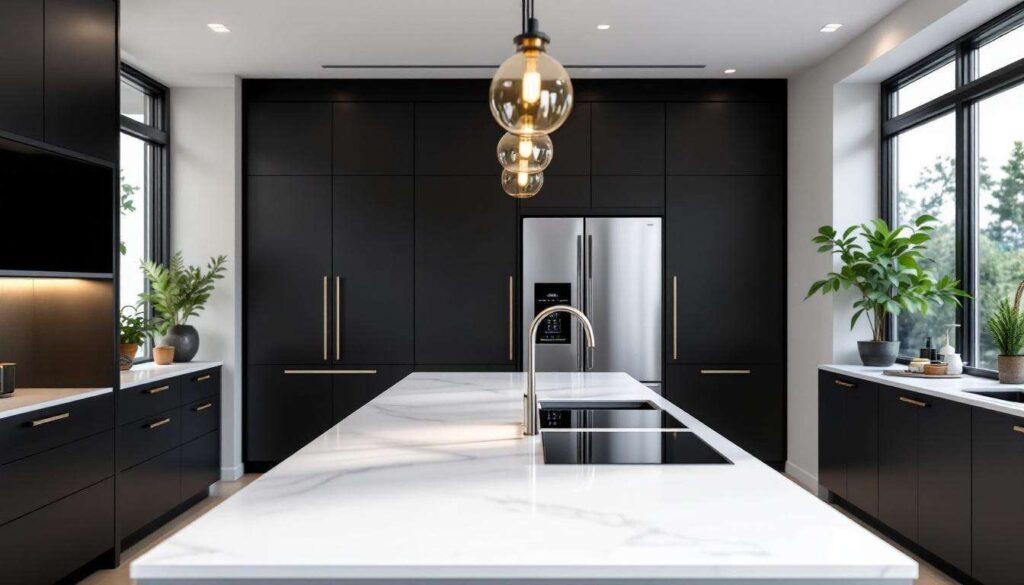
The kitchen island has evolved from a simple preparation surface into a multifunctional centrepiece that serves various purposes throughout the day. Contemporary designs incorporate varying counter heights to accommodate different activities, from casual dining to intensive food preparation. Some islands now feature integrated appliances, hidden storage compartments and pop-up electrical outlets that maintain clean sightlines whilst providing essential functionality.
Designers recommend considering moveable elements within your layout, such as wheeled trolleys or modular units that can be repositioned according to specific tasks. This flexibility proves particularly valuable in kitchens that serve as entertainment spaces, allowing you to reconfigure the area when hosting guests.
These spatial considerations naturally lead to questions about the surfaces themselves and how material innovations are reshaping kitchen design possibilities.
Countertop innovations and surface technology advances
Engineered materials with superior performance
Countertop technology has advanced considerably, with engineered surfaces offering unprecedented durability and aesthetic variety. Porcelain slabs have gained significant traction amongst designers due to their resistance to heat, scratches and staining. These surfaces can replicate the appearance of natural stone, concrete or even wood whilst providing superior performance characteristics that natural materials cannot match.
| Surface Material | Heat Resistance | Maintenance Level | Design Versatility |
|---|---|---|---|
| Porcelain slabs | Excellent | Low | Very high |
| Quartz composite | Good | Low | High |
| Natural stone | Variable | High | Moderate |
| Recycled glass | Good | Moderate | Moderate |
Integrated technology within surfaces
The most forward-thinking countertop designs now incorporate embedded technology that enhances functionality without compromising aesthetics. Wireless charging pads can be seamlessly integrated into work surfaces, whilst touch-sensitive controls for lighting and appliances eliminate the need for visible switches. Some manufacturers offer surfaces with antimicrobial properties, addressing hygiene concerns that have become increasingly important to homeowners.
Understanding how these advanced surfaces work alongside intelligent appliances creates a cohesive technological ecosystem within your kitchen.
Smart appliances and connected ecosystems
Seamless integration and voice control
Modern kitchens benefit enormously from appliances that communicate with each other and with you. Refrigerators with internal cameras allow you to check contents remotely whilst shopping, reducing food waste and unnecessary purchases. Ovens with precision temperature control and remote monitoring ensure perfect cooking results even when you’re attending to other tasks elsewhere in your home.
- Induction hobs with automatic pan detection and safety shut-off features
- Dishwashers with soil sensors that optimise water and energy consumption
- Extraction systems with air quality monitoring and automatic speed adjustment
- Taps with touchless activation and temperature memory functions
Energy monitoring and efficiency optimisation
Connected appliances provide detailed energy consumption data that helps you understand and reduce your household’s environmental impact. Many systems now offer scheduling capabilities that take advantage of off-peak electricity rates, whilst usage analytics identify opportunities for efficiency improvements. This data-driven approach to kitchen management appeals particularly to environmentally conscious homeowners seeking to minimise their carbon footprint.
This focus on efficiency and environmental awareness extends beyond technology into the fundamental materials and practices that define sustainable kitchen design.
Sustainable kitchen design and responsible choices
Material sourcing and lifecycle considerations
Designers increasingly emphasise sustainable material selection that considers both environmental impact and longevity. Reclaimed timber for shelving and accent features adds character whilst reducing demand for newly harvested wood. Cabinet manufacturers now offer FSC-certified materials and low-VOC finishes that improve indoor air quality and demonstrate environmental responsibility.
Recycled content surfaces, including those made from post-consumer glass or industrial by-products, provide beautiful and durable options that align with circular economy principles. These materials often perform as well as or better than conventional alternatives whilst carrying a significantly reduced environmental burden.
Water conservation and waste reduction systems
Contemporary kitchen design incorporates systems that minimise resource consumption without sacrificing functionality. Low-flow taps with aerators maintain water pressure whilst reducing consumption by up to forty per cent. Integrated composting solutions and recycling stations make waste sorting convenient and hygienic, encouraging better household practices.
- Greywater systems that recycle sink water for garden irrigation
- Compost bins with charcoal filters to eliminate odours
- Pull-out sorting bins sized for different recyclable materials
- Food waste disposers with sound insulation and continuous feed operation
These sustainable choices extend to the visual elements of your kitchen, where tile selections can make significant aesthetic and environmental statements.
Kitchen tile trends and surface applications for 2026
Large-format tiles and minimal grout lines
The trend towards larger tile formats continues to dominate kitchen design, with slabs measuring up to three metres in length becoming increasingly common. These oversized tiles create seamless visual expanses that make spaces feel larger and more cohesive. Reduced grout lines also mean easier cleaning and maintenance, addressing practical concerns alongside aesthetic preferences.
Designers favour tiles with subtle texture and depth, moving away from perfectly flat surfaces towards options that catch and reflect light in interesting ways. Matte finishes have gained popularity over high-gloss alternatives, offering sophisticated elegance without the fingerprints and water spots that plague shinier surfaces.
Statement backsplashes and feature walls
Whilst large-format tiles dominate floor and wall applications, backsplashes remain an opportunity for creative expression. Geometric patterns, handcrafted tiles and unexpected colour combinations transform this functional element into a focal point. Some designers recommend extending backsplash tiles to ceiling height, creating dramatic vertical interest that draws the eye upward and enhances perceived room height.
| Tile Style | Best Application | Maintenance |
|---|---|---|
| Large porcelain slabs | Floors, walls | Very low |
| Handcrafted ceramic | Backsplashes | Moderate |
| Natural stone | Feature walls | High |
| Glass mosaic | Accent areas | Low |
The visual impact of these tile selections depends heavily on how they interact with your kitchen’s lighting scheme, making illumination design a critical consideration.
Lighting design optimisation and visual comfort
Layered lighting strategies
Effective kitchen lighting requires multiple layers working in harmony to provide appropriate illumination for various tasks and moods. Ambient lighting establishes overall brightness levels, whilst task lighting focuses on specific work areas such as countertops and hobs. Accent lighting highlights architectural features or decorative elements, adding depth and visual interest to the space.
- Recessed ceiling fixtures with dimming capabilities for ambient light
- Under-cabinet LED strips providing shadow-free task illumination
- Pendant lights over islands creating visual anchors and focused light
- Toe-kick lighting offering subtle wayfinding during evening hours
Colour temperature and circadian considerations
Designers now recognise the importance of adjustable colour temperature in kitchen lighting, acknowledging how light affects mood and biological rhythms. Cooler temperatures (4000-5000K) enhance concentration during food preparation, whilst warmer tones (2700-3000K) create inviting atmospheres for dining and socialising. Smart lighting systems allow you to programme these changes automatically, aligning your kitchen’s ambience with natural circadian patterns.
Careful attention to glare reduction and shadow elimination ensures visual comfort throughout the day. Designers recommend positioning task lights to illuminate work surfaces from multiple angles, preventing the harsh shadows that single-source lighting creates. This thoughtful approach to illumination enhances both functionality and the overall aesthetic quality of your kitchen environment.
These five custom features represent the convergence of aesthetic sophistication, technological innovation and environmental responsibility in contemporary kitchen design. By prioritising flexible layouts, advanced materials, intelligent appliances, sustainable practices and thoughtful lighting, you create a space that responds to your needs whilst remaining visually compelling. The most successful kitchen remodels balance timeless design principles with forward-thinking features, ensuring your investment delivers satisfaction and functionality for decades. Designers emphasise that whilst trends evolve, kitchens built on solid planning principles and quality materials consistently outperform those chasing fleeting fashions. Your remodelling project offers an opportunity to create a genuinely personalised space that reflects your values, supports your lifestyle and enhances your home’s overall value.